The convention center lights have dimmed in Las Vegas, but the shockwaves from CES 2026 are just beginning to ripple through the gaming world. As the dust settles on the world’s largest tech showcase, one thing is clear: 2026 is the year where experimental concepts finally became production-ready reality. From shape-shifting displays to silicon that redefines mobile efficiency, the best of CES 2026 winners have set a terrifyingly high bar for the rest of the year.
We saw a distinct shift away from incremental upgrades toward transformative hardware. The headlines were dominated by the normalization of massive VRAM pools, the arrival of Intel’s long-awaited 18A process, and displays that literally bend the rules of immersion. After scouring the show floor and testing the hardware, we’ve crowned the five definitive winners that you need to know about. Here is the most anticipated gaming tech of 2026.
1. Lenovo Legion Pro Rollable: The Ultimate Transformer
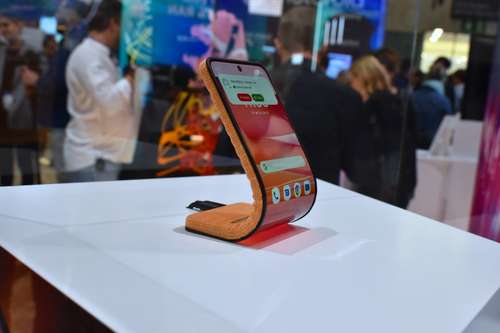
For years, rollable screens were merely fragile prototypes behind glass cases. In 2026, Lenovo broke that barrier with the Lenovo Legion Pro Rollable laptop, a device that rightfully earned our top spot for innovation. At first glance, it looks like a standard 16-inch gaming laptop, but with a press of a button, motorized actuators silently extend the screen horizontally, expanding the canvas to a massive 24-inch, 32:9 ultrawide aspect ratio.
The engineering behind this is nothing short of spectacular. Lenovo calls the mechanism “Dual-Drive,” which unrolls the flexible PureSight OLED panel from both sides to maintain structural rigidity. The software experience is just as polished, offering three distinct modes: "Focus" (16-inch) for productivity, "Tactical" (21.5-inch) for HUD-heavy strategy games, and "Arena" (24-inch) for total immersion. By solving the age-old problem of wanting a desktop-sized monitor in a backpack-sized chassis, Lenovo hasn’t just made a gadget; they’ve created a new category of mobile PC.
2. MSI GeForce RTX 5090 Lightning Z: The 32GB Titan
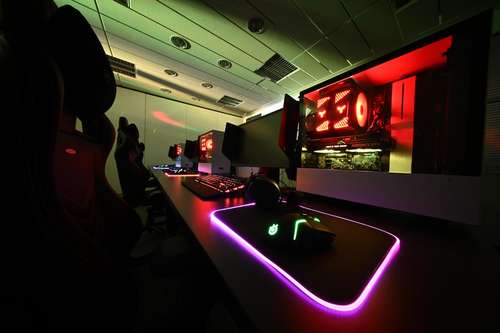
If the MSI RTX 5090 Lightning Z proves one thing, it’s that the era of VRAM anxiety is over for enthusiasts. While the base RTX 50-series cards were already impressive, MSI’s flagship implementation stole the show by pushing the boundaries of what a consumer GPU can handle. This 32GB GDDR7 behemoth is built to chew through unoptimized 8K textures and path-traced environments without breaking a sweat.
The Lightning Z isn't just about raw specs; it’s a masterclass in thermal engineering. It features a stunning carbon fiber backplate that reduces weight while improving structural integrity—crucial for a quad-slot card. Under the hood, a new "Hybrid-Fin" radiator design works in tandem with a full-coverage copper cold plate to tame the 575W TGP. With support for NVIDIA’s new DLSS 4 Multi Frame Generation, this card is the undeniable king of CES 2026 gaming awards, promising to drive the next generation of high-fidelity VR and simulation rigs.
3. Intel Panther Lake: Mobile Gaming Reborn on 18A
While flashy peripherals often grab the spotlight, the most significant long-term victory at CES 2026 belongs to silicon. Intel Panther Lake gaming performance has officially lived up to the hype, marking the debut of the company’s revolutionary 18A process node. These Core Ultra Series 3 chips are not just an iteration; they represent a fundamental redesign of mobile power efficiency.
The flagship chips demonstrated on the show floor showcased a staggering 70% performance-per-watt improvement over Meteor Lake. For gamers, the real star is the integrated Arc Xe3 graphics engine. We witnessed thin-and-light ultrabooks running Cyberpunk 2077 at 1080p High settings without a discrete GPU—a feat that was unthinkable just two years ago. By decoupling high-end gaming from heavy power bricks, Panther Lake is set to make handhelds and ultrabooks the dominant platforms of 2026.
4. Samsung Odyssey 3D: The Death of VR Headsets?
When discussing the best gaming monitors 2026, refresh rates usually dominate the conversation. However, Samsung took a left turn that paid off immensely with the Odyssey 3D (G90XH). This 32-inch monitor offers a 6K resolution and features a proprietary lenticular lens system that delivers convincing, glasses-free 3D visuals.
Using real-time eye-tracking cameras built into the bezel, the monitor adjusts the 3D parallax instantly as you move your head, eliminating the "sweet spot" issues of older tech. In demos, the depth perception in flight simulators and RPGs was startlingly realistic, offering a VR-like layer of immersion without the fatigue of wearing a headset. Combined with a blistering 165Hz refresh rate (overclockable to 330Hz in 2D mode), the Odyssey 3D suggests that the future of display technology adds depth, not just pixels.
5. Lenovo Legion Go (SteamOS Edition)
Rounding out our list is a surprise pivot that delighted handheld purists. The new Legion Go refresh has ditched Windows for a custom, native build of SteamOS. While Windows handhelds have power, their battery life and UI clunkiness have always been Achilles' heels. By partnering directly with Valve to optimize the OS for their hardware, Lenovo has created the seamless console-like experience that enthusiasts have been begging for.
The device sports an updated 8.8-inch variable refresh rate screen and refined ergonomic controllers, but the software harmony is the real winner here. Boot times are instant, sleep/wake functions actually work, and the overhead on the processor is significantly reduced, translating to an extra hour of battery life in AAA titles. It’s a bold move that cements the Legion Go as a top contender for the most anticipated gaming tech 2026.