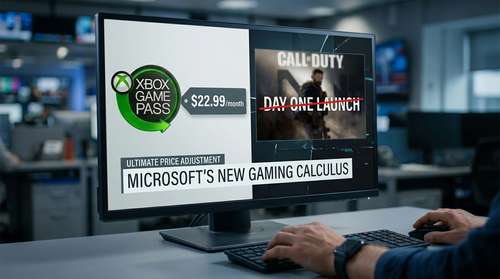
In an unprecedented pivot for the video game industry, Microsoft has announced a significant Xbox Game Pass price cut, lowering the cost of its flagship Ultimate tier from $29.99 to $22.99 per month. However, this financial relief comes with a massive caveat for first-person shooter fans: the definitive end of Call of Duty Day One launches on the service. This abrupt restructuring reflects a changing reality for gaming subscription trends and marks the first major policy shift under new Microsoft Gaming CEO Asha Sharma.
A Dramatic Shift in Microsoft Gaming Strategy
The recent history of Microsoft's subscription model has been a rollercoaster for consumers. Just seven months ago, in October 2025, the Game Pass Ultimate price soared to an eye-watering $29.99, an aggressive 50% increase that triggered widespread pushback and cancellations across the gaming community. At the time, the strategy seemed focused on maximizing revenue per user, but the sheer cost quickly alienated the core demographic.
Under the fresh leadership of Asha Sharma, Microsoft has officially reversed course. In an internal memo that leaked earlier this month, Sharma candidly admitted that the service had become \"too expensive for players,\" highlighting the need for a more sustainable value equation. The resulting $7 price drop is a direct response to player feedback and plateauing subscription numbers, proving that even tech giants have a ceiling when testing consumer loyalty.
The updated Microsoft gaming strategy demonstrates a willingness to pivot quickly. The company openly acknowledged in a blog post that the previous model was not suitable for everyone, stating they will \"continue to listen and learn\". By pulling the price back down, Xbox hopes to re-engage lapsed players who abandoned the ecosystem during last year's aggressive monetization push.
The End of Call of Duty Day One on Game Pass
While subscribers will undoubtedly celebrate the cheaper monthly bill, the discount comes at the expense of one of the platform's biggest selling points. Following the historic $75.4 billion acquisition of Activision Blizzard, the promise of playing blockbuster shooters at launch without paying full retail price was a massive draw. Now, the company is shifting to a premium-first model to recoup development and acquisition costs.
According to the official announcement, upcoming titles will hit Game Pass during the following holiday season—meaning subscribers will face roughly a year-long wait to play the newest campaigns and multiplayer maps. The decision makes clear financial sense for Microsoft. Releasing a game that routinely sells tens of millions of copies straight to a subscription service left billions of dollars on the table, a gamble that apparently didn't pay off despite the initial subscription spikes seen during the Black Ops 6 launch window.
The math, however, still works out favorably for a specific type of consumer. Paying $22.99 a month rather than $30 saves loyal users $84 annually, effectively covering the $70 cost of purchasing the new shooter outright. Additionally, existing titles already in the library, including last year's Black Ops 7, will remain fully accessible to all active members.
What Happens to PC Game Pass in 2026?
Console players aren't the only ones seeing adjustments this week. The PC Game Pass 2026 pricing structure is also getting a welcome revision, dropping from $16.49 back down to $13.99 per month. Just like their console counterparts, PC players will lose immediate access to the newest military shooters but retain the massive library of other day-and-date releases.
Microsoft has confirmed that the service will continue to provide immediate access to other major first-party franchises. Fans can still expect day-one availability for upcoming heavy hitters, alongside returning catalog benefits. The current PC tier also retains its partnerships, offering access to the EA Play library and various Riot Games perks, ensuring the fundamental value of the subscription remains intact.
Current benefits remaining unaffected by the restructure include:
- First-Party Exclusives: Franchises like Forza, Fable, and Gears of War will continue to launch day-and-date on the service.
- Third-Party Additions: Recent inclusions like the Ubisoft+ Classics Collection and indie day-one drops remain standard.
- Perks and Cloud Gaming: Ultimate subscribers keep access to Xbox Cloud Gaming and the newly integrated Fortnite Crew subscription service.
Analyzing Broader Gaming Subscription Trends
This strategic retreat highlights a broader reality check for gaming subscription trends. For years, the industry narrative suggested that all-you-can-play subscriptions would become the definitive future of gaming, mimicking the disruptive video streaming wars led by Netflix and Hulu. Yet, absorbing the immense development costs of AAA megahits while simultaneously keeping monthly fees affordable has proven to be an impossible balancing act.
Other publishers are undoubtedly taking notes. Sony has historically kept its newest blockbuster PlayStation exclusives off the PlayStation Plus Premium tier, opting instead to drive traditional full-price software sales. Microsoft's decision to align its biggest intellectual property with a traditional retail release schedule validates Sony's more conservative approach to subscription libraries.
By lowering the entry barrier while reserving ultra-premium titles for direct sales, Xbox aims to attract users back to the ecosystem without sacrificing its most lucrative retail opportunities. Whether this massive structural gamble pays off remains to be seen, but it fundamentally redefines the value proposition of modern gaming's most ambitious subscription service.