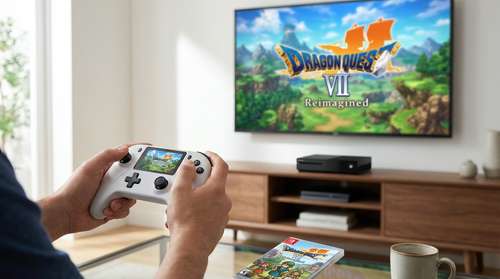
For nearly three decades, Dragon Quest VII has been the black sheep of Yuji Horii’s legendary lineage—a game revered for its massive scope but often reviled for its glacial pacing and archaic presentation. With the release of Dragon Quest VII Reimagined on Nintendo Switch 2 and PS5, Square Enix and developer Hexadrive have achieved the impossible: they have excavated a diamond from the rough, polishing this sprawling epic into the accessible, visually breathtaking masterpiece it was always meant to be. This isn't just a fresh coat of paint; it is the definitive JRPG experience of 2026.
A Visual Renaissance on Nintendo Switch 2
The first thing that strikes you about Dragon Quest VII Reimagined is its bold new aesthetic. Moving away from the traditional anime style or the HD-2D look of recent remakes, the team has opted for a "hand-crafted diorama" approach. Powered by Unreal Engine 5, the world looks like a living set of meticulously carved wooden toys and clay figures. On the Nintendo Switch 2, the game shines in crisp 4K docked mode, with the new hardware’s ray-tracing capabilities giving the plastic and wood textures an uncanny, tactile realism. The lighting effects, particularly during the game's somber twilight vignettes, add an emotional weight that the PS1 original could only hint at.
Performance is flawless across the board. While the PS5 version offers a blisteringly fast loading experience, the Switch 2 version holds its own with rock-solid 60fps performance, proving the new console is more than capable of handling complex next-gen engines. This visual overhaul does more than just look pretty; it grounds the game's fragmented world, making each island feel like a distinct, fragile artifact you are piecing back together.
Gameplay: The Moonlighting Mechanic Changes Everything
The most significant gameplay innovation in DQ7 Reimagined gameplay is the introduction of the "Moonlighting" system. Historically, Dragon Quest VII required players to grind through a single vocation before moving to the next. The new system allows characters to equip a secondary class, blending abilities and stat bonuses. This opens up deeper strategic layers early in the game; Maribel can now combine the magical potency of a Mage with the agility of a Thief, creating hybrid builds that make boss battles far more dynamic.
Combat has also seen quality-of-life improvements. The new "Let Loose" ability adds a tension-like mechanic that feels rewarding without breaking the balance, and the visible enemy encounters—first seen in the 3DS port but refined here—eliminate the frustration of random battles. The addition of "Vocational Perks" further incentivizes experimentation, ensuring that no class feels like a stepping stone. It’s a modernization that respects the turn-based roots while injecting the fluidity expected in JRPG reviews 2026.
Pacing: Respecting Your Time
The original game’s most infamous hurdle—the two-hour opening sequence with no combat—has been brilliantly streamlined. In Dragon Quest VII Reimagined, the intro is a tight, narrative-focused 40 minutes that establishes the mystery of the Shrine of Mysteries without overstaying its welcome. The narrative script has been sharpened, removing redundant dialogue while preserving the melancholic, "irrational" tone that makes this entry unique. The new "Story Synopsis" feature in the menu is a godsend for players who might take breaks between the game’s 100+ hour runtime, ensuring you never lose the thread of the plot.
The Emotional Core Remains
Despite the streamlined pacing, the emotional core of the "Fragments of the Forgotten Past" remains untouched. The vignette-style storytelling, where you restore lost islands and witness the often tragic histories of their inhabitants, hits harder than ever with the new voice acting and expressive character animations. The tragedy of Kiefer and the sorrow of the petrified town are presented with a cinematic flair that elevates the storytelling to modern standards.
Verdict: The Essential Dragon Quest
Dragon Quest VII Reimagined is a triumph of preservation and innovation. It takes a game that was once "too big" and "too slow" and transforms it into a compelling, manageable, and deeply moving adventure. Whether you are playing on the high-powered PS5 or taking the journey handheld on the Nintendo Switch 2, this is a must-play title. Square Enix has not just remade a game; they have vindicated a legacy. For fans waiting for PS5 gaming news or the next big Switch hit, the wait is over. The stone tablets have been reassembled, and the result is perfection.