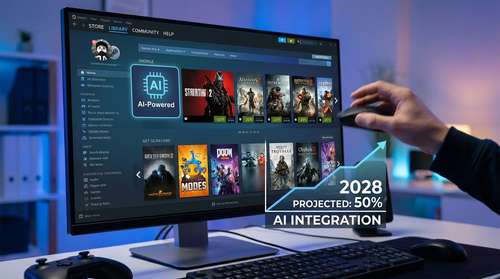
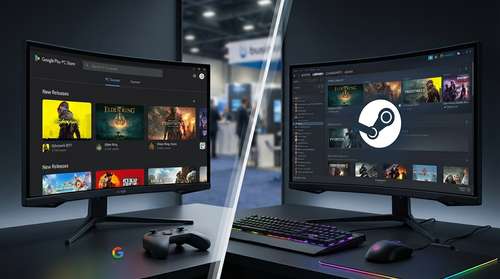
The PC gaming landscape just experienced a seismic shift. For decades, Valve’s Steam has stood as the undisputed heavyweight champion of digital PC game distribution, weathering challenges from various competitors. But at the Game Developers Conference this week, a new challenger entered the arena with unparalleled scale. Google has officially launched the Google Play PC Store, transforming its massive mobile marketplace into a unified desktop gaming platform that directly threatens Steam's long-standing monopoly.
Announced on March 11 during the GDC 2026 announcements, this is not merely an Android emulator for Windows. Google has introduced a native PC SDK, empowering developers to publish high-performance, native desktop games directly alongside their mobile counterparts. By leveraging its existing relationship with billions of Android users, the tech giant is making a calculated play for a massive slice of the $40 billion PC gaming market.
The Dawn of the Google Play PC Store
Google’s ambitions have evolved dramatically since the shuttering of its Stadia cloud gaming service. Rather than fighting the hardware limitations of cloud streaming, the company has pivoted to native execution. The rollout of the Google Play PC Store marks the first time players can purchase, download, and launch native desktop applications directly through the Play infrastructure.
To make this transition seamless for developers, Google unveiled a robust native PC SDK—closely mirroring the functionality of the Steamworks SDK. This toolkit provides built-in support for in-app purchases, advanced security protocols, and custom control mapping. As a result, developers are now encouraged to publish dual builds through the Google Play Console, offering a PC-native version alongside the traditional Android APK.
Breaking Down the Google Play Gaming Hub
To accommodate this massive influx of Play Store PC games, the user interface has received a complete overhaul. The storefront now features a dedicated PC gaming tab, designed specifically for desktop navigation. This dedicated space filters out mobile-only touch games, surfacing high-fidelity titles optimized for keyboard, mouse, and gamepad inputs.
"Buy Once, Play Anywhere" Accelerates Cross-Platform Gaming
Perhaps the most consumer-friendly initiative revealed during the GDC 2026 announcements is the new cross-purchase model. Dubbed "Buy once, play anywhere," this pricing structure bridges the historical gap between mobile and desktop ecosystems. If you purchase a premium title on your Android phone, you automatically unlock the native PC version on your desktop at no additional cost.
This initiative represents a massive leap forward for cross-platform gaming. Players can start a campaign on their gaming rig at home, rely on cloud-synced save data, and continue their progress on their mobile device during their morning commute. While Microsoft has attempted similar synergy between Xbox and Windows, Google’s massive mobile footprint gives this feature unprecedented reach, especially as we see more AAA PC games on Android devices.
Game Trials and the AI Sidekick
PC gamers are notoriously protective of consumer-friendly features, particularly Steam's generous two-hour refund policy which essentially functions as a universal demo system. Recognizing this, Google is introducing "Game Trials" to the platform.
This try-before-you-buy feature grants players a one-hour free trial for premium titles. It addresses one of the most significant friction points in digital storefronts, allowing users to test performance on their specific hardware before committing their wallets. Furthermore, the platform is rolling out a brand-new AI assistant named "Sidekick". Integrated directly into the overlay of select titles, Sidekick can provide real-time hints, answer gameplay questions, and pull up relevant guides without forcing the player to alt-tab into a web browser.
Building a Social Foundation
A storefront cannot survive on transactions alone; it needs a community. To that end, the new Google Play gaming hub integrates comprehensive social features. Players will see the introduction of robust community posts, user reviews, and discussion boards directly on game pages. This social layer is a page taken directly from Steam’s playbook, keeping users engaged with the ecosystem long after they close their games.
Google vs Steam 2026: The Battle for the Desktop
The conversation surrounding Google vs Steam 2026 will undoubtedly dominate the industry for the foreseeable future. Epic Games spent billions securing exclusive titles and giving away free games to carve out a meager single-digit market share against Valve. Google, however, is approaching the battlefield from an entirely different flank.
Instead of trying to poach existing PC gamers with exclusives, Google is leveraging the billions of users who already have Google accounts, credit cards tied to Play Store profiles, and existing libraries of games. By offering a frictionless transition from phone to desktop, they are lowering the barrier to entry for casual audiences while simultaneously courting hardcore gamers with native performance and cross-progression.
Valve has maintained its dominance through continuous iteration and immense consumer goodwill. Yet, with native PC support, universal cross-buy, and an aggressive push into social features, the Google Play PC Store is the most credible threat to Steam’s empire in over twenty years. The platform wars have officially moved from the console living room to the desktop monitor, and the PC gaming community stands to reap the benefits of this renewed competition.