It’s been over a decade since a mysterious blue butterfly first taught us that every action has a consequence. Since 2015, the landscape of choice-driven adventures has evolved dramatically, but the emotional core of this specific universe has always remained unmatched.
Arriving today, March 26, 2026, the highly anticipated conclusion to Arcadia Bay’s most famous residents is finally in our hands. In this definitive Life is Strange Reunion review, we examine whether Deck Nine has managed to deliver the satisfying Max and Chloe finale that fans have spent eleven years waiting for. While it occasionally stumbles over familiar franchise hurdles—most notably its sluggish opening hours—the game offers a breathtakingly bold and emotionally devastating closure to one of gaming's most beloved duos.
A Fiery Return to Caledon University
Following the controversial timeline-merging events of 2024's Double Exposure, we find Max Caulfield comfortably settled into her role as a photography teacher at Caledon University. That comfort shatters instantly when she returns from a weekend away to discover the campus engulfed in a catastrophic inferno. The death toll is staggering, pushing Max to push her newly resurgent 'Rewind' powers to their absolute limit. Jumping back exactly three days via a polaroid selfie, the race to prevent the fire begins.
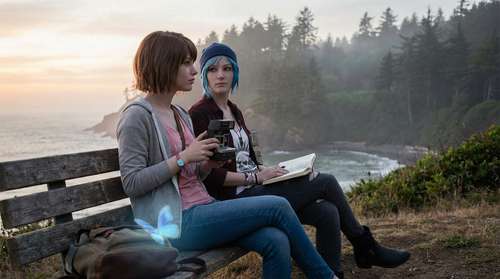
However, the real emotional powder keg ignites when Chloe Price unexpectedly arrives on campus. Now working as the touring band manager for Drugstore Makeup, Chloe is suffering from severe metaphysical trauma—plagued by 'impossible memories' of a timeline where she was sacrificed. The writing here is sharp, mature, and unflinchingly honest. It tackles trauma and survivor's guilt with a nuance that elevates it above typical Square Enix narrative games.
Dual Protagonists Elevate the Life is Strange 2026 Gameplay
For the very first time in the series, players are given control of both protagonists in a single, unified story. This drastically changes the Life is Strange 2026 gameplay loop, creating a dynamic puzzle-solving experience that requires you to use both women's strengths. Max's returning 'Rewind' power allows you to manipulate short bursts of time, gleaning crucial information from failed conversations and altering your immediate environment to solve four-dimensional puzzles.
Meanwhile, Chloe brings her signature 'Backtalk' mechanic back to the table, and it feels more refined than ever. Where Max is careful and calculated, Chloe is a sledgehammer. She uses her quick wit, punk-rock attitude, and abrasive charm to intimidate prime suspects and bully her way into restricted areas that Max could never access.
Transitioning between these two drastically different playstyles keeps the investigation feeling fresh, and it perfectly mirrors their contrasting personalities. Max carefully undoes mistakes, while Chloe fiercely confronts obstacles head-on. The seamless switching between the two women during high-stakes action sequences is a technical marvel. It shows exactly why the developers opted to skip PlayStation 4 and Xbox One entirely, focusing all their optimization efforts on the advanced hardware capabilities of current-generation platforms.
Navigating Branching Timelines and Pacing Hurdles
Long-time fans will recognize some minor flaws that frequently appear in Deck Nine Games reviews. The opening act suffers from a sluggish pace as it attempts to dump an overwhelming amount of lore and backstory on the player. Because this chapter serves as a grand culmination of everything that came before, the script has to do heavy lifting to explain how the parallel timelines brought us here. With characters returning from multiple past entries, newcomers might feel entirely lost during the first two hours.
There are also moments where the unskippable dialogue, while charmingly authentic to the artsy university setting, drags down the urgency of the impending inferno. You're trying to stop a mass-casualty fire, yet you can still spend twenty minutes listening to pretentious students argue about podcasting at the campus bar, The Snapping Turtle.
Yet, once the momentum builds, the narrative branching becomes incredibly complex. Your decisions as both characters weave together in unexpected ways, leading to drastically different outcomes for the Caledon student body. The stakes feel genuinely life-or-death, and you’ll almost certainly find yourself reaching for a Life is Strange Reunion choices guide on your second playthrough just to see how the butterfly effect alters the climax.
Earning Its Place Among the Best Narrative Games 2026
What makes this entry truly special isn't just the return of familiar mechanics or the stunningly rendered particle effects of the burning campus. It’s the profound respect the developers have for these characters. The chemistry between Hannah Telle and Rhianna DeVries remains unparalleled in the voice-acting space, carrying the emotional weight of a decade's worth of storytelling.
Ultimately, this title doesn't just rest on its nostalgic laurels. It forces players to confront the true cost of tampering with time, delivering a Max and Chloe finale that is as heartbreaking as it is beautiful. Despite some early pacing hiccups, the ambitious dual-protagonist mechanics and deeply resonant storytelling cement its status as an early frontrunner for the best narrative games 2026 has to offer. It is a triumphant, tear-jerking farewell to the girls who taught us that some friendships really can survive the end of the world.