
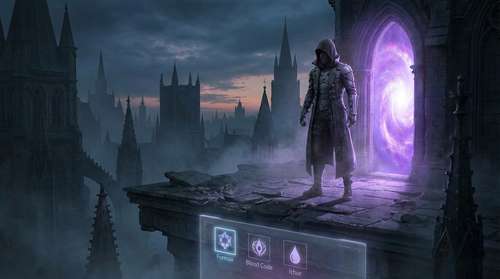
The wait is finally over. Following its global launch on January 30, 2026, Code Vein II has unleashed a new era of vampiric action-RPG punishment upon players worldwide. While the original game was affectionately dubbed "anime Dark Souls," Bandai Namco's ambitious sequel has evolved into something far more complex. With a shift to an open-world structure, the introduction of time-travel mechanics, and a completely revamped combat system, even veteran Revenants are finding themselves seeing the "Ash" screen more often than expected. Whether you're struggling with the new Formae system or trying to optimize your Ichor economy against the Blinded Resurgence Offspring, these essential Code Vein II tips and tricks will help you survive the mist.
1. Master the Trinity of Formae
Gone is the simple Gift system of the past. Code Vein II introduces Formae, a three-lane ability system that defines your build. Ignoring this new hierarchy is a one-way ticket to respawning at a Mistle. You need to balance Weapon Formae (your active, stamina-consuming attacks), Bequeathed Formae (summoned phantom weapons like the new Energy Bow), and Defensive Formae.
Many beginners make the mistake of loading up purely on offensive skills. However, the new Defensive Formae are critical because they dictate your parry windows. Unlike the first game's static parry timings, your window now depends on the defensive skill you have equipped. Experiment early to find a Defensive Formae that matches your reaction time, or you'll be punished severely by the faster, more aggressive "Horror" enemies.
2. Embrace Real-Time Blood Code Swapping
One of the most game-changing features in Code Vein II is the ability to swap Blood Codes mid-combat. In the prequel, you were locked into a class until you rested. Now, you can—and should—create "Loadout Links" that allow you to toggle between two Blood Codes on the fly.
A highly effective Code Vein 2 build strategy is to pair a heavy, high-defense Code (like the returning Atlas) for tanking hits with a high-mobility, caster-focused Code for creating distance. When a boss begins a long wind-up animation, switch to your heavy Code to tank the chip damage, then instantly swap back to your caster Code to punish them with Ichor-based projectiles while they recover. Mastering this toggle is essential for late-game survival.
3. Optimize Companion Synergy with Link Points
The Partner system has received a massive overhaul. You are no longer just fighting near an AI; you are fighting with them via the new Link Points gauge. As you fight alongside companions like the time-traveling Lou MagMell, this gauge fills, allowing you to trigger "Duo Arts."
Don't hoard your Link Points. Using a Duo Art not only deals massive damage but also forces a stagger state on most bosses, giving you a crucial window to heal or regenerate stamina. Furthermore, pay attention to your partner's specific buffs. Lou, for example, offers a passive regeneration to your Ichor stock when you are in critical health, making her an ideal partner for aggressive, high-consumption builds.
4. Navigate the Open World with Your Motorbike
Code Vein II ditches linear corridors for a sprawling, interconnected open world. To traverse the ruined cityscapes and the timeline-shifted past, you are given a Motorbike. However, the map is initially covered in "Radar Jammers" that create a fog of war, obscuring objectives and Mistle locations.
Don't just drive aimlessly. Prioritize hunting down these Jammers first. Destroying them not only clears the map but often rewards you with Condensed Ichor, a key upgrade material for your Jails (specialized sub-weapons). Also, remember that your bike has combat capabilities—use its boost ram to knock down smaller mobs before dismounting to finish them off, saving you precious resources.
5. Aggressive Ichor Management is Key
Ichor management remains the heartbeat of combat, but the economy has shifted. Passive regeneration is slower in Code Vein II, forcing you to rely on aggressive Drain Attacks. The new "Quick Drain" mechanic allows you to perform a drain instantly after a successful dodge, rather than waiting for a combo finisher.
To keep your Ichor topped up, practice the "Dodge-Drain" loop. Dodge an enemy attack and immediately press the drain modifier. This restores a large chunk of Ichor and keeps the pressure on. If you play too passively, you will run out of resources long before the boss's health bar is depleted.
6. Utilize Time Travel to Alter Boss Arenas
The narrative premise of traveling 100 years into the past isn't just for story fluff—it's a gameplay mechanic. Actions you take in the "Past" timeline can alter the terrain of the "Present." If you are struggling with a boss in the Present day because the arena is flooded or covered in hazards, look for a Time Rift.
Traveling back and fixing a broken dam or destroying a corruption node in the past can clear those hazards in the present boss fight. This is often the "secret" to defeating seemingly impossible bosses like the Blinded Resurgence Offspring. If a fight feels unfair, you probably missed a puzzle in the past timeline.
7. Don't Neglect Your "Jails"
Jails are a new category of equipment that function as specialized sub-weapons or tools. These range from grappling hooks for traversal to riot shields for crowd control. Many beginners ignore them in favor of their main weapon, but Jails are vital for specific enemy types.
For shielded enemies, use a "Breaker" Jail to shatter their guard instantly. For flying enemies that are hard to reach with melee, equip a "Tether" Jail to pull them down to the ground. Upgrading your Jails is just as important as upgrading your sword or bayonet, so spend those materials at the home base.