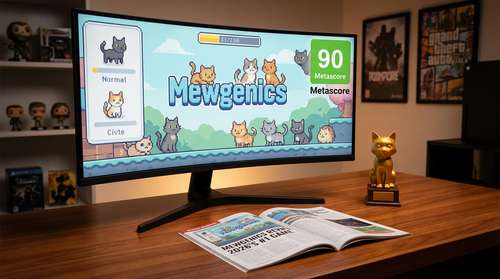
It’s official: the highest-rated game of 2026 isn’t a sprawling AAA open-world RPG or a cinematic shooter. It’s a game about breeding mutated cats and forcing them to fight for survival. As of February 20, 2026, Edmund McMillen’s Mewgenics has not only secured a prestigious 90 Metascore and the coveted “Must-Play” badge, but it has also shattered sales records, surpassing 1 million copies sold in just its first week. For fans of tactical roguelikes, this isn't just another indie release; it is the new gold standard.
The Return of the Roguelite King
When Edmund McMillen, the mastermind behind The Binding of Isaac and Super Meat Boy, first announced Mewgenics in 2012, few could have predicted the 14-year odyssey that would follow. Now that it’s finally here, the wait appears to have been worth every second. Critics and players alike are hailing it as McMillen's magnum opus, a title that refines the addictive loops of his previous works into something far more complex and rewarding.
The premise is deceptively simple: you breed cats, manage their traits, and send them into turn-based tactical battles. However, under the hood lies a genetic simulation so deep it makes other management games feel shallow. With over 1,200 abilities and endless genetic combinations, no two playthroughs—or cats—are ever the same.
Deep Genetic Warfare: A Review of the Mechanics
The core of our Mewgenics review focuses on the game's standout feature: its brutally complex breeding system. This isn't about raising cute kittens; it's about optimizing genetic freaks for warfare. You might find yourself breeding a cat with a "Chronically Incontinent" trait, not for a laugh, but because when paired with specific items like plastic bottles, it creates an infinite source of healing water for your squad. It is this kind of bizarre, emergent synergy that defines the experience.
The combat takes place on procedurally generated grids that demand sharp tactical thinking. Much like Into the Breach or Final Fantasy Tactics, positioning is everything. But in Mewgenics, your units are expendable, and their deaths are permanent. Losing a prize fighter you’ve spent generations perfecting is heartbreaking, but the roguelite structure ensures that their genetic legacy—stronger stats, unique mutations—lives on in their offspring. This "legacy" system is what keeps you hooked for "just one more run," easily pushing playtimes past the 100-hour mark.
Comparison to 2026's Best
In a year stacked with heavy hitters, Mewgenics stands alone at the top. While titles like Nioh 3 and Perfect Tides: Station to Station have performed admirably with scores in the mid-80s, Mewgenics is the only title in 2026 to crack the 90+ threshold on Metacritic. Its launch momentum has even eclipsed massive hits from previous years; it recorded over 115,000 concurrent players on Steam this past weekend, surpassing the all-time peaks of genre titans like Hades 2.
Why It’s Selling Millions
The news that Mewgenics hit the 1 million sales milestone this week is a testament to its viral nature. The game is difficult, often gross, and unapologetically weird—classic McMillen signatures—but it is also incredibly fair. The sheer volume of content is staggering, featuring:
- 12+ Unique Classes: From Tanks to Mages, determined by your breeding choices.
- 6+ Biomes: distinct environments that force you to adapt your strategy.
- 200+ Hours of Content: A massive campaign that evolves as you play.
For players searching for the best indie games of 2026, Mewgenics offers a value proposition that is hard to beat. It respects the player's time by constantly rewarding experimentation with new discoveries, whether that's a new rare fur pattern or a game-breaking ability combo.
Verdict: A Masterpiece of Chaos
Mewgenics is not for the faint of heart. Its humor is dark, its difficulty is punishing, and its learning curve is steep. Yet, it is undeniably the highest-rated game of 2026 for a reason. It manages to balance the chaotic fun of a physics sandbox with the intellectual satisfaction of a grand strategy game.
If you have even a passing interest in tactical roguelike games, this is an essential purchase. Edmund McMillen and Tyler Glaiel have delivered a game that will likely be studied and played for the next decade, much like Isaac before it. The "cat-breeder" might sound bizarre on paper, but in practice, it is absolute genius.