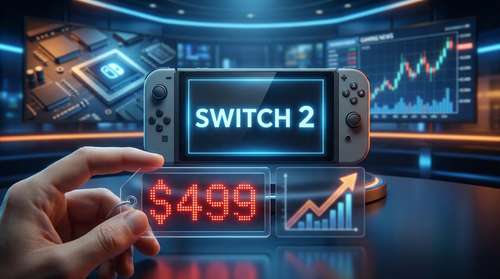
If you have been waiting to buy Nintendo's latest console, you might want to act fast. A new industry report suggests a Nintendo Switch 2 price hike is on the horizon for 2026, driven by a "perfect storm" of economic pressures. According to the latest forecasts from market intelligence firm Niko Partners, the days of the $449 entry-level price point may be numbered. Analysts predict that Nintendo could effectively raise the cost of ownership by $50, not by changing the sticker price of the console itself, but by forcing a shift toward more expensive bundles.
Niko Partners Gaming Predictions: The End of the $449 Standalone Unit?
The headline from the January 2026 Niko Partners report is clear: the current pricing strategy for the Switch 2 is unsustainable. While the console launched at a competitive $449, undercutting rivals like the PlayStation 5 and Xbox Series X, analysts believe this advantage is eroding. The firm's Niko Partners gaming predictions indicate that Nintendo may soon discontinue the standalone base model entirely.
Instead of a traditional MSRP increase, the report suggests a strategic pivot. By removing the standalone SKU from store shelves, Nintendo would effectively make the Nintendo Switch 2 bundle price of $499 the new entry level. This bundle, likely paired with a flagship title like Mario Kart World, would allow Nintendo to protect its margins without technically announcing a "price increase"—a tactic often used to mitigate consumer backlash while navigating video game console inflation.
The "Perfect Storm": Tariffs and Memory Costs
Why is this happening now? The industry is facing what experts call a perfect storm of rising costs. Two main factors are squeezing hardware manufacturers in early 2026: aggressive new trade tariffs and a surge in semiconductor prices.
Switch 2 Memory Price Surge
The most immediate pressure comes from inside the machine. A Switch 2 memory price surge is hitting manufacturing hard. Reports indicate that the cost of the 12GB RAM modules essential for the console's performance has jumped by approximately 41% in recent months. This inflation is largely driven by the booming AI sector, which is swallowing up the global supply of high-speed memory for data centers, leaving consumer electronics to fight for the scraps at premium prices.
Trade Tariffs Squeeze Hardware Margins
Compounding the component issue are new trade dynamics. Nintendo 2026 hardware news has been dominated by discussions of updated U.S. trade tariffs on goods imported from manufacturing hubs in Asia. While Nintendo President Shuntaro Furukawa has stated that the company is "monitoring the situation," analysts argue that absorbing these extra costs is no longer viable. Unlike software, which has high margins, hardware is often sold at a loss or thin profit; these new tariffs might be the straw that breaks the camel's back.
What This Means for Gamers in 2026
For consumers, the writing is on the wall. If these Switch 2 cost increase 2026 predictions hold true, the window to grab a console for under $450 is closing. We have already seen Sony and Microsoft adjust their pricing strategies in response to similar pressures, and Nintendo is likely to follow suit.
The shift to a mandatory bundle strategy does offer some value—you get a game included, after all—but it removes the flexibility for budget-conscious gamers who might have preferred to buy the console solo or buy used games. If you are planning to jump into the next generation of Nintendo gaming, buying sooner rather than later might save you that extra $50.