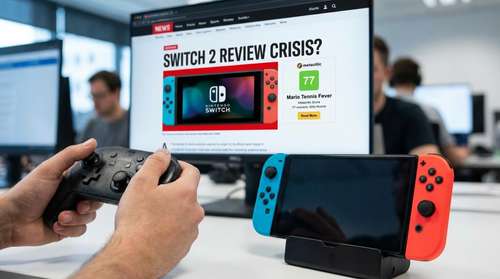
It’s been less than a week since the embargo lifted for Mario Tennis Fever, and the conversation surrounding Nintendo’s latest first-party release has shifted from excitement to palpable anxiety. With the game’s Mario Tennis Fever Metacritic score settling at a tepid 77 as of February 15, 2026, a growing number of Switch 2 owners are asking a difficult question: Is Nintendo prioritizing release quantity over the creative innovation that defined the previous generation?
The 'Mario Tennis Fever' Verdict: Good, Not Great
Releasing officially on February 12, Mario Tennis Fever was positioned as the first major sports title to showcase the Switch 2's capabilities in 2026. Developed by long-time partner Camelot, the game introduces the controversial "Fever Rackets" mechanic and a new visually distinct Adventure Mode. However, the Mario Tennis Fever gameplay review consensus paints a picture of a game that plays it safe.
While outlets like CGMagazine praised the tight mechanics with a high 9/10, major publications were far less forgiving. IGN awarded it a 7/10, criticizing the Adventure Mode as essentially an "extended tutorial," while VGC went lower with a 3/5, citing a lack of meaningful solo content. The recurring critique is that while the game is visually stunning—running at a flawless 4K 60fps, silencing the Nintendo Switch 2 performance debate for now—it lacks the depth expected from a next-gen flagship title. The "Fever" mechanics, intended to be a game-changer, have been described by some critics as "chaotic but shallow," removing the technical precision fans loved in Mario Tennis Aces.
The 'Switch 2 Edition' Fatigue
The lukewarm reception to Mario Tennis Fever wouldn't be as alarming if it existed in a vacuum. However, it arrives amidst a flood of what fans are calling "Switch 2 Editions." The Nintendo 2026 release schedule for the first quarter is packed with enhanced ports rather than new experiences. With Super Mario Bros. Wonder - Nintendo Switch 2 Edition slated for March 26 and an Animal Crossing update having just landed, there is a perception that Nintendo is leaning too heavily on padding the library with re-releases.
This strategy has sparked a debate about Switch 2 first-party game quality. Are these "Editions" taking resources away from original projects? The recent release of Tokyo Scramble on February 11, a survival horror title involving subterranean dinosaurs, has been a bright spot for original IP, but it hasn't been enough to quell the fears that the first half of 2026 is relying too much on nostalgia and safe bets.
Looking Ahead: Panic or Patience?
Despite the current gloom, writing off the console's future would be premature. The best Switch 2 launch exclusives lists are still growing, and the immediate horizon shows promise. Resident Evil: Requiem is dropping on February 27, promising a dual-protagonist narrative with Leon Kennedy that utilizes the console's new hardware features. Furthermore, the mysterious Pokémon Pokopia, a life-sim spin-off scheduled for March 5, suggests Nintendo is still willing to take weird, creative risks with its biggest IPs.
The 2026 Pipeline
Industry insiders suggest that the current lull is the calm before a storm of major announcements. Rumors persist of a massive 3D Mario reveal later this spring, potentially timed to coincide with the console's one-year anniversary in June. For now, players have to decide if "solid" 7/10 experiences like Mario Tennis Fever are enough to justify the upgrade, or if they should wait for the heavy hitters promised later in the year.
Ultimately, a 77 Metacritic score isn't a disaster—it's just not the revolution fans were hoping for in February 2026. As the Nintendo Switch 2 review scores continue to roll in for other Q1 titles, we'll see if this is a temporary stumble or a sign of a shifting philosophy at Nintendo.