
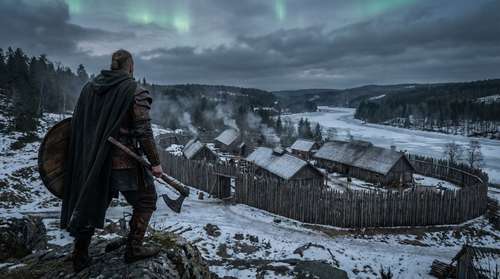
The long-awaited tactical RPG NORSE: Oath of Blood has officially launched today on PC, plunging players into a brutal recreation of Viking-age Norway. As Gunnar, a young warrior stripped of his birthright and seeking vengeance for his father's murder, you aren't just commanding a squad—you are responsible for the survival of an entire clan. With a narrative penned by acclaimed author Giles Kristian, the game demands more than just sharp axe-work; it requires shrewd Norse Oath of Blood village management and a tactical mind capable of outthinking ruthless AI opponents.
Many new Jarls are already finding themselves overwhelmed by the game's unforgiving economy and the permanent consequences of combat. Unlike other genre contemporaries where losses are easily replaced, every fallen warrior here is a blow to your settlement's future. Whether you are struggling to keep your granaries full or finding your shield wall constantly flanked, this Norse Oath of Blood beginner guide covers the essential strategies you need to endure your first week in the frozen north.
1. Prioritize Smithy Upgrades Over Barracks
One of the most common mistakes early players make is rushing to expand their warband size before they can properly equip their existing fighters. In the early game, a small, well-armored squad is infinitely more effective than a large, ragtag mob. Your first major investment should be in the best starting buildings in Norse Oath of Blood: specifically, the Smithy and its subsequent upgrades.
Upgrading the Smithy doesn't just unlock better stat sticks; it opens up the crafting trees for mail armor and reinforced shields. In the current build, the difference between leather tunics and basic chainmail is staggering, often allowing your frontline units to tank two or three additional hits before entering the critical injury state. Focus your initial resources on upgrading the Smithy to Tier 2 immediately. This allows you to craft the 'Brokkr’s' line of weapons, which have higher durability and damage output, essential for cracking the heavy armor of the rival clan elites you'll face in Chapter 2.
2. Master the Engagement and Glima Systems
Combat in this Viking tactical RPG strategy game revolves around the 'Engagement' mechanic. When a unit enters melee range of an enemy, they become 'Engaged,' locking them in combat. Breaking this lock triggers a free attack of opportunity. Smart players use this to their advantage by using tanky Shield-Maidens to lock down dangerous enemy archers or berserkers, preventing them from targeting your squishier healers and flankers.
Furthermore, don't ignore the 'Glima' wrestling abilities. Every character has access to basic grapples, but they are often overlooked for damage-dealing skills. Using a Glima throw to hurl an enemy off a cliff or into a burning thatch roof is often more effective than a standard attack. It can also break an enemy's guard, setting them up for a lethal backstab from your rogue units. Positioning isn't just about cover; it's about controlling who can move and who gets thrown into the mud.
3. How to Survive Winter in Norse RPG: The Resource Timeline
The game introduces a dynamic 'Timeline' system for resources, which many players ignore until it's too late. As you progress, the seasons change, and winter brings a harsh penalty to food production and scavenging operations. To survive winter in Norse RPG, you must stockpile resources during the autumn months. The game doesn't explicitly tell you a hard freeze is coming, but the environmental cues are there.
Pay close attention to the 'Supply' tab in your settlement hub. If your projected food surplus dips below +5 per day, you are in the danger zone. During winter, hunting parties take longer to return and bring back less meat. Shift your workforce from timber and ore production to fishing and farming aggressively before the snow settles. Failing to do so results in the 'Malnourished' debuff for your warriors, slashing their stamina and making them easy pickings in combat.
4. Navigate the Diplomacy System Carefully
You cannot fight the entire world alone. The Norse Oath of Blood diplomacy guide isn't just about picking dialogue options; it's about trading and strategic marriages. Early in the game, you will be approached by smaller neighboring clans offering tribute or requesting aid. While it's tempting to raid everyone for quick loot, forming a defensive pact with the 'Fjord-Walkers' or 'Raven-Clan' can provide you with passive income and unique trade goods.
Trading is the only reliable way to get 'Cold Iron' early on, a rare material needed for high-tier axes. If you alienate every neighbor, you cut off your supply lines. Pay attention to the reputation meter; if it drops too low, neutral factions will join your enemies in raids against your settlement. sometimes, paying a blood price (weregild) to avoid a war is the smarter tactical move than starting a fight you can't finish.
5. Respect the Injury and Permadeath System
Unlike standard RPGs where health resets after battle, NORSE: Oath of Blood uses a persistent injury system. If a warrior falls in battle, they don't just respawn; they might die permanently or suffer a 'Maimed' status that lowers their stats for several in-game weeks. A warrior with a 'Broken Arm' cannot use shields effectively, making them a liability.
Rotate your squad. Do not rely on a single 'A-Team.' If your best Berserker is wounded, let him rest in the Healer's Hut for a few days. Pushing a wounded unit into combat increases the likelihood of a permanent death roll. It is better to take a slightly lower-level fighter into a skirmish than to risk losing your highest-level champion forever. Building the Healer's Hut early (right after the Smithy) is crucial for managing this attrition.