Capcom's long-delayed lunar epic has finally landed. Released globally on April 17, 2026, the game surpassed one million units sold in just its first 48 hours. For players searching for a definitive Pragmata review, the verdict is wonderfully complex. The game stands out as a genuine technical marvel, boasting jaw-dropping 2nm-powered visuals and an emotionally resonant narrative core. Yet, its highly experimental mechanics are leaving the community entirely split. While it easily secures a spot among the best sci-fi games 2026 has to offer, the steep learning curve guarantees it won't be for everyone.
A Breathtaking Lunar World and Metascore Divide
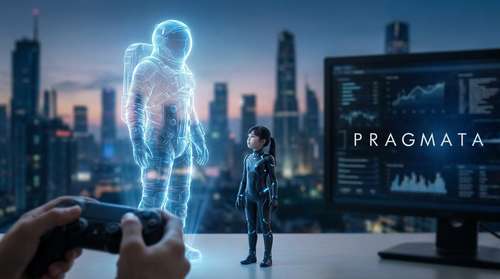
The narrative centers around spacefarer Hugh Williams and Diana, a unique android created using Lunafilament. Together, they must navigate a massive lunar research facility that has been entirely taken over by a rogue AI known as IDUS. Built on an extensively overhauled RE Engine, the environmental design is spectacular. The station feels appropriately desolate, with industrial architecture clashing against the unnatural presence of dead filament—a toxic byproduct that threatens organic life.
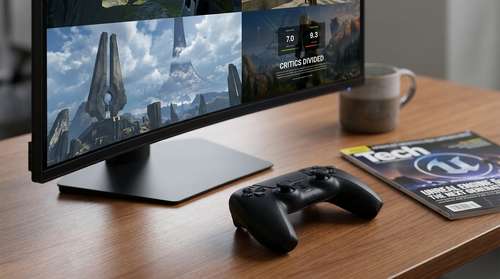
However, the Capcom Pragmata Metascore currently hovers in the mid-80s, a number that masks the sharp division within the player base. Reviewers universally praise the hauntingly beautiful corridors of the moon base and the genuine chemistry between the leads. The final rating fluctuates wildly depending on how a specific critic tolerates the game's boldest mechanical risk.
Pragmata Sync-Hacking Combat Explained
The primary source of friction is the brutal dual-character combat loop. If you are looking for a Pragmata sync-hacking combat explained breakdown, you are definitely not alone. The core gameplay loop forces players to control Hugh's third-person shooting and jetpack evasions simultaneously with Diana's grid-based hacking routines.
Overcoming the Steep Learning Curve
Since Hugh's conventional firearms cannot penetrate heavy robotic armor, Diana must hack enemy defense systems via a real-time cursor mini-game while Hugh dodges incoming fire. Players must navigate a grid to reach target tiles, toggling optional bonus nodes to buff weapon damage. For a segment of the audience, this brain-splitting multitasking is a stroke of genius. For others, it is an exercise in pure frustration, driving thousands of fans to consult a Pragmata gameplay walkthrough just to survive the punishing early boss encounters. Once the rhythm clicks, however, executing a flawless synchronized takedown feels incredibly rewarding.
The Heart of the Game: Diana's Role
Despite the mechanical friction, the narrative bond between the two protagonists is undeniable. Diana is the beating heart of the experience. If you need a quick Pragmata Diana AI companion guide, her utility extends far beyond simply opening locked doors. She spots environmental anomalies, highlights hidden pathways with her scanning abilities, and provides an innocent, child-like commentary that perfectly contrasts the bleak isolation of the station.
To ease the difficulty of the campaign, players can also leverage the physical Diana amiibo, which grants a daily supply of weapon skins and crucial recovery items. Finding hacking nodes scattered throughout the facility also allows you to upgrade her capabilities back at the Shelter, turning her from a vulnerable companion into a formidable battlefield asset.
Hardware Showdown: Switch 2 vs Current-Gen
Capcom made a massive technical gamble launching this resource-heavy title across multiple console generations simultaneously. Any thorough Pragmata Nintendo Switch 2 vs PS5 comparison reveals a fascinating achievement in modern optimization.
The PlayStation 5 and Xbox Series X versions flex the full might of their processors, delivering stunning 4K resolution at a blisteringly smooth 60 frames per second. The reflections on the lunar surface and the particle effects during heavy combat are a visual treat. Surprisingly, the Nintendo Switch 2 handles the demanding interface remarkably well. While it sacrifices some of the advanced ray-traced lighting and runs at a lower dynamic resolution, the core multitasking combat remains tightly responsive, never dropping frames when it matters most.
Pragmata refuses to play it safe. Capcom has delivered a bizarre, beautiful, and demanding journey that completely reimagines what an escort mission can be. Whether the sync-hacking clicks for your brain or leaves you hurling your controller, the lunar station of Babel Industries demands to be experienced.