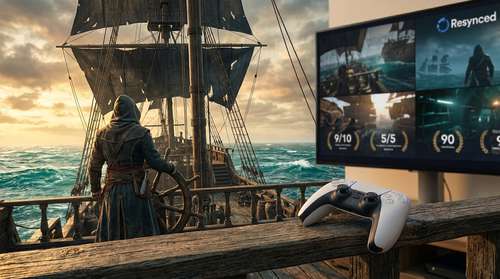
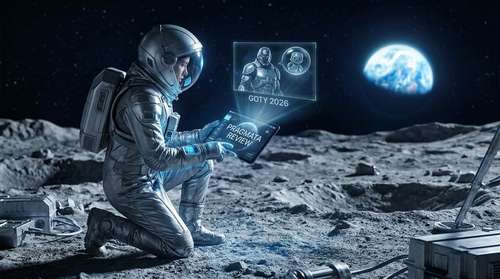
After a development cycle that began with a cryptic reveal trailer back in 2020, the wait is finally over. Capcom's highly anticipated sci-fi action title has officially hit digital storefronts today, April 16, 2026. In our definitive Pragmata review, we explore how this stunning lunar adventure effortlessly blends tactical action with a deeply moving narrative, proving that the years of patience and multiple delays were absolutely worth it.
Atmospheric Exploration and Pragmata Story Explained
If you find yourself asking is Pragmata good when it comes to narrative depth, the answer is a resounding yes. The game transports players to a sprawling, collapsing lunar research station. Here, we meet our two protagonists: a heavily armored spacefarer named Hugh, who must form an unlikely partnership with a mysterious, highly capable android girl named Diana. Their primary objective sounds simple on paper—survive the hostile environment and fight their way back to Earth—but the execution is incredibly layered.
The core of the Pragmata story explained revolves around their desperate struggle against a hostile, station-controlling artificial intelligence known as IDUS. Capcom intentionally abandons traditional action-movie tropes in favor of a subtle, emotional storytelling approach. As you explore the decaying facilities, you uncover audio logs, holographic remnants, and environmental clues that piece together the tragedy of the lunar colony's downfall.
What truly grounds the narrative, however, is the evolving dynamic between Hugh and Diana. The android girl is not just a plot device; she brings a sense of childlike wonder and eerie calm to the desolate, zero-gravity environments. You genuinely grow to care about their survival, making the high-stakes escape mission feel deeply personal.
Capcom Pragmata Gameplay: The Mastery of 'Dual-Link' Combat
The true star of the show, and what elevates this title to masterpiece status, is the Capcom Pragmata gameplay. While built on the legendary RE-Engine, this isn't just another straightforward third-person shooter. The development team has introduced an innovative 'Dual-Link' combat system that completely redefines the sci-fi action genre.
Instead of merely protecting an AI companion through tedious escort missions, players actively coordinate Hugh's heavy weaponry and physical strength with Diana's advanced technological abilities. Diana can manipulate the battlefield using intricate hacking mechanics, creating holographic shields, disabling rogue security drones, and exposing enemy weak points.
Mastering Tactical Action
During intense enemy encounters, you must constantly balance offensive firepower with tactical environmental puzzle-solving. Triggering synchronized attacks—where Hugh launches enemies into the air for Diana to pin down with localized gravity wells—feels incredibly rewarding. The combat requires you to think on your feet, perfectly merging atmospheric exploration with heart-pounding, high-stakes tactical action.
The Sights and Sounds of a Dead Moon
Beyond the engaging combat mechanics, the audio-visual presentation deserves special recognition. The eerie silence of the vacuum of space is frequently punctuated by the terrifying metallic groans of the collapsing lunar station and the heavy, deliberate thuds of Hugh's spacesuit. Combined with a haunting, atmospheric orchestral score, the audio cues perfectly heighten the tension when the IDUS forces close in. This level of sensory immersion makes every step across the lunar surface feel fraught with danger.
Pragmata PS5 Pro Performance and Nintendo Switch 2 Review
Visually, this title is a cinematic tour de force that pushes next-generation hardware to its absolute limits. Our Pragmata PS5 Pro performance testing reveals a masterclass in software optimization. Playing on Sony's upgraded console delivers flawless, buttery-smooth frame rates even during the most chaotic firefights. The integration of astonishing path-traced lighting and incredibly detailed particle effects brings the decaying lunar colony to life. Every reflection in Hugh's visor and every spark of malfunctioning machinery feels meticulously crafted.
A Surprising Triumph on Handheld Hardware
Equally impressive is our Pragmata Switch 2 review. Capcom made a bold choice bringing such a demanding, technically ambitious game to Nintendo's new hardware, but the gamble paid off brilliantly. While the Switch 2 version naturally scales back some of the cutting-edge path-tracing seen on the beefy RTX 5090 PC builds and the PS5 Pro, it maintains a rock-solid frame rate and preserves the game's striking art direction.
Playing a visually ambitious title of this massive scale on a portable device feels genuinely groundbreaking. The loading times are snappy, and the controls map perfectly to the new Joy-Cons, proving that Capcom's multi-platform strategy was executed with absolute care. For players who previously experienced the demo, you will be pleased to know that your early progression seamlessly carries over to the full release.
Verdict: One of the Best Capcom Games 2026
It is exceptionally rare for a game to spend this long in development and actually exceed the massive hype surrounding it. Yet, Capcom has managed to pull off the impossible. By combining an emotionally resonant, character-driven story with the ingenious Dual-Link combat system, this sci-fi odyssey stands out effortlessly in a crowded gaming market.
Without a doubt, this lunar masterpiece is an early Game of the Year contender and will easily go down as one of the best Capcom games 2026 has to offer. Whether you are actively battling the relentless IDUS rogue AI, solving environmental puzzles in zero gravity, or simply taking in the breathtaking, melancholic views of Earth from the desolate lunar surface, this is an unforgettable journey. The stars truly are not the limit here—they are just the beginning of Capcom's incredible new franchise.