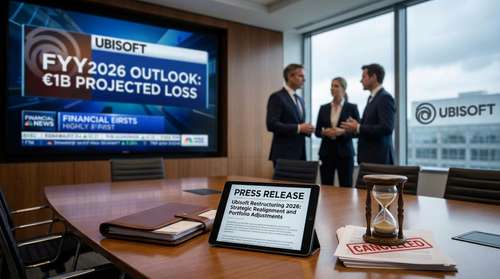
In a seismic shift for the video game industry, Ubisoft has officially cancelled the Prince of Persia: The Sands of Time Remake along with five other projects as part of a desperate corporate restructuring. The French publishing giant confirmed on January 21, 2026, that it projects a staggering €1 billion operating loss for the fiscal year. This announcement marks a dark start to 2026, signaling the end of the road for the embattled Prince of Persia remake and the closure of two major studios, including Ubisoft Stockholm.
Prince of Persia: The Sands of Time Remake Cancelled
After years of development hell, studio transfers, and delays, the Prince of Persia: The Sands of Time Remake is officially dead. Ubisoft confirmed the cancellation during an emergency investor update, citing an inability to meet enhanced quality standards despite repeated attempts to salvage the project. The game, originally announced in 2020, had been passed from Ubisoft Pune/Mumbai to Ubisoft Montreal, but ultimately failed to align with the company's new strategic direction.
Alongside the high-profile Prince of Persia cancellation, Ubisoft has terminated development on five other titles. These include an unannounced mobile game and three original intellectual properties (IPs) that had not yet been revealed to the public. The cancellations are expected to result in a write-down of approximately €650 million, contributing significantly to the publisher's projected financial losses.
New 'Creative House' Structure Revealed
To stem the bleeding, Ubisoft is pivoting to a radically decentralized operating model. Effective April 2026, the company will reorganize into five specialized Creative Houses, each with autonomous leadership and financial accountability. This move aims to strip away the bloated middle management that has plagued the company for years.
The 5 Creative Houses:
- Vantage Studios (Flagship): Will house the company's biggest earners, including Assassin's Creed, Far Cry, and Rainbow Six.
- Shooters & Competitive: Dedicated to The Division, Ghost Recon, and Splinter Cell.
- Live Services: Focusing on long-tail revenue drivers like The Crew, For Honor, and Skull & Bones.
- Narrative Adventures: The new home for story-driven IPs such as Rayman and Beyond Good & Evil.
- Family & Mobile: Managing casual hits like Just Dance and mobile portfolios.
"We are reducing the number of products so that we have the best core teams for each and every project," stated CFO Frederick Duguet. The goal is clear: fewer games, higher quality, and a relentless focus on open-world adventures and Games-as-a-Service (GaaS) models.
Ubisoft 1 Billion Euro Loss and Stock Market Reaction
The financial reality behind this decision is grim. Ubisoft lowered its net bookings forecast to roughly €1.5 billion for the fiscal year ending March 2026, while projecting a €1 billion operating loss. This massive deficit is largely driven by the cancellation write-downs and the delay of seven other titles, including the rumored Assassin's Creed: Black Flag remake, which has been pushed to Fiscal Year 2027.
The market reaction was immediate and volatile. Ubisoft stock (EPA: UBI) has seen significant turbulence, dropping roughly 7% earlier in the week before hovering around €6.37 following the announcement. Investors are seemingly pricing in the bad news, leaving the stock down approximately 40% over the last 12 months. The company faces a steep uphill battle to regain investor confidence, with debt levels expected to sit between €150 million and €250 million by year's end.
Ubisoft Stockholm Closure and Industry Layoffs 2026
The restructuring has a very human cost. Ubisoft confirmed the permanent closure of Ubisoft Stockholm, a studio that had contributed to Avatar: Frontiers of Pandora, as well as Ubisoft Halifax in Canada. Layoffs and restructuring measures are also hitting Massive Entertainment, RedLynx, and the Abu Dhabi studio.
This news contributes to a worrying trend of video game industry layoffs in 2026. While 2025 saw a slight easing of job cuts compared to the bloodbath of 2024, analysts predict 2026 could see upwards of 7,500 job losses across the sector as companies like Ubisoft correct for pandemic-era over-expansion. In a controversial move to boost efficiency, Ubisoft is also mandating a strict 5-day return-to-office policy for all remaining staff, a decision likely to spark further internal debate.
For gamers, the message is bittersweet. While the dream of a modernized Sands of Time is over, Ubisoft's survival now depends entirely on delivering undeniable quality in its remaining franchises. The days of experimental AA titles are over; the era of the "Creative House" has begun.