
Valve has officially pushed back the announcement of specific pricing and shipping dates for its highly anticipated 2026 hardware suite, citing a "sharp rise" in component costs driven by the ongoing global AI infrastructure surge.
In a quiet update to its Steam Hardware FAQ late Friday, the Bellevue-based gaming giant confirmed that while the new Steam Machine console and Steam Frame VR headset are still targeting a launch window in the first half of 2026, the volatile memory market has made it impossible to lock in final consumer prices this week. The delay comes amidst what industry analysts are calling "RAMmageddon"—a critical shortage of DRAM and NAND flash memory that has seen prices skyrocket by nearly 95% since late 2025.
AI Impact on Gaming Hardware: The "RAMmageddon" Reality
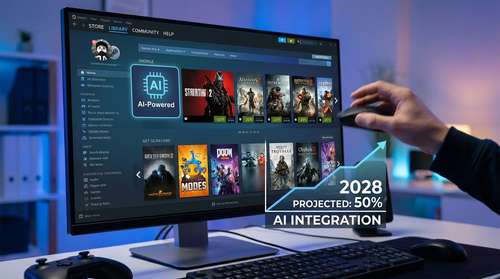
The primary culprit behind the delay is the unprecedented demand for high-bandwidth memory (HBM) and standard DDR5 RAM from the artificial intelligence sector. As tech giants race to build massive data centers for generative AI models, memory manufacturers like Samsung and SK Hynix have aggressively reallocated production lines away from consumer electronics to serve high-margin enterprise clients.
"The limited availability and growing prices of these critical components mean we must revisit our exact shipping schedule and pricing, especially around Steam Machine and Steam Frame," Valve stated in the update. This shortage has created a ripple effect across the PC hardware price increase 2026 landscape, impacting everything from graphics cards to next-gen consoles.
Why This Affects Valve's Pricing Strategy
Unlike traditional consoles that are often sold at a loss to recoup costs through software sales, Valve's hardware has historically walked a fine line between premium performance and accessibility. The RAM shortage gaming industry experts warned about has now forced Valve into a difficult position: either launch at a significantly higher price point than the rumored $599 entry or delay locking in prices until the market stabilizes. With the Steam Frame VR headset news suggesting a high-end standalone device capable of PC-grade performance, the memory cost per unit is likely substantial.
Steam Frame and Steam Machine: What We Know So Far
Despite the pricing setback, excitement remains high for Valve's return to the living room. The new Steam Machine is widely expected to be a "console-fied" version of the Steam Deck architecture—a powerful, small-form-factor PC running a TV-optimized version of SteamOS living room console software. Leaks suggest it targets 4K gaming with an emphasis on local multiplayer and seamless cloud syncing.
The Steam Frame, codenamed "Deckard," is the more ambitious of the two. Described by insiders as a "Steam Deck for your face," it is a standalone VR headset that reportedly features inside-out tracking, pancake lenses, and the ability to wirelessly stream high-fidelity VR games from a PC or the new Steam Machine. However, this standalone capability requires significant onboard RAM and storage—the very components currently in crisis.
Valve Steam Controller 2 Update: New Features Revealed
Alongside the console and headset, the FAQ update briefly touched on the Valve Steam Controller 2 update. The successor to the cult-classic original controller is confirmed to feature "force-sensitive" inputs and an evolution of the dual-trackpad design.
Recent patent filings and datamined drivers point to a controller that bridges the gap between mouse-and-keyboard precision and traditional gamepad ergonomics. It reportedly includes:
- Four programmable rear grip buttons with pressure sensitivity
- Modular thumbsticks similar to the Xbox Elite controller
- Next-generation haptic feedback engines
- Seamless switching between "Desktop" and "Gamepad" modes
While the controller is less affected by the memory shortage than the console or headset, Valve appears intent on launching the entire ecosystem simultaneously.
The Broader 2026 Hardware Landscape
Valve is not the only company feeling the squeeze. The AI impact on gaming hardware has created a "crowding out" effect, where gamers are competing for the same silicon as billion-dollar AI clusters. Analysts predict that PC hardware price increase 2026 trends will continue through Q3, potentially making this year one of the most expensive times to build a PC in over a decade.
For now, prospective buyers can only wait. Valve has promised another update "in the coming weeks" regarding the Valve Steam Machine release date and pricing structure. If the rumors of a $1,200 price tag for the Steam Frame hold true, it may position the device strictly for enthusiasts, leaving the Steam Machine to battle for the mainstream living room audience.