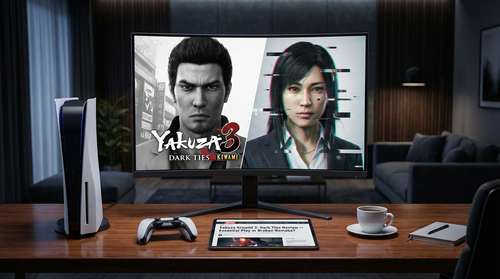
The Dragon of Dojima has returned to the sandy shores of Okinawa, but his latest homecoming is far from the triumphant victory lap fans expected. Yakuza Kiwami 3: Dark Ties, the long-awaited 2026 remake of the franchise's most divisive entry, officially launched this week on PS5, Xbox Series X, and the new Nintendo Switch 2. While the package promises the definitive version of Kazuma Kiryu's heartfelt orphanage saga alongside a gritty new expansion, our Yakuza Kiwami 3 review finds a game at war with itself—caught between narrative brilliance and a reportedly chaotic development cycle that has left visible scars on the final product.
Dark Ties: A Narrative Triumph for Yoshitaka Mine
If there is one undeniable reason to pick up this package, it is the titular Dark Ties expansion. For years, fans have clamored for more screen time for Yoshitaka Mine, the Hakuho Clan patriarch often cited as one of the series' best antagonists. RGG Studio has delivered in spades. This standalone campaign, accessible from the main menu, offers a brooding, noir-inspired look into Mine's ascent through the Tojo Clan ranks. The writing here is sharp, mature, and devoid of the bloat that plagues the main campaign.
Playing as Mine offers a distinct flavor of brutality. Unlike Kiryu's stoic brawling, Mine's combat is precise and vicious, utilizing a new technical moveset that feels rewarding to master. The narrative threads woven here add tragic context to the main game's climax, transforming what was once a straightforward villain arc into a complex study of loyalty and loneliness. It is a stunning achievement that arguably outshines the core remake it accompanies.
The Okinawa Problem: Technical Glitches and Production Troubles
Unfortunately, the praise for Dark Ties crashes hard against the reality of the base game. Yakuza Kiwami 3: Dark Ties suffers from a lack of polish that is uncharacteristic for RGG Studio. Whether you are playing on a high-end PC or looking for PS5 Pro game reviews to justify your console upgrade, the visual experience is bafflingly inconsistent. While the water rendering off the coast of the Morning Glory Orphanage is breathtaking, NPC models frequently glitch out, and textures in the downtown Ryukyu district often fail to load, leaving blurry, PS3-era surfaces in their wake.
These issues point to the widely rumored production troubles that have dogged the game's development. Insider reports suggest the project was rushed to meet the 20th-anniversary deadline, and it shows. Frame rate drops are common during heat actions, and the transition to the latest iteration of the Dragon Engine seems to have introduced physics bugs that see enemies launching into the stratosphere upon defeat—funny the first time, immersion-breaking the fiftieth.
Combat Evolved: Ryukyu Style Shines
Despite the technical hiccups, the combat team has managed to salvage the gameplay loop. The new "Ryukyu Style," which incorporates Okinawan weaponry and improvised tools, is a blast. It offers a faster, more fluid alternative to the heavy-hitting "Dragon of Dojima: Kiwami" style. Crushing enemies with a well-timed oar swing or utilizing the environment in dynamic new ways proves that the underlying combat logic is still top-tier, even if the engine struggles to keep up.
The Casting Controversy: A Shadow Over the Release
Perhaps the most heated topic surrounding this Like a Dragon remake 2026 is the Yakuza casting controversy. RGG Studio made the bold choice to recast several key characters, most notably Go Hamazaki. The decision to bring in Teruyuki Kagawa for the role has drawn sharp criticism from Western outlets and fans alike, given the actor's real-world scandals. Beyond the ethical debates, the performance itself feels disjointed, lacking the menacing charisma of the original voice actor. It creates a jarring disconnect in scenes that are supposed to carry immense dramatic weight.
Similarly, the redesign of Rikiya Shimabukuro—Kiryu's lovable aniki in Okinawa—has been met with confusion. The new model leans too heavily into hyper-realism, losing the expressive charm that made his character so endearing in the 2009 original. These artistic choices feel like change for change's sake, alienating purists without adding value for newcomers.
Verdict: A Flawed Gem Worth Polishing
Yakuza Kiwami 3: Dark Ties is a difficult game to score. As a RGG Studio news headline, it represents a stumbling block for a developer that has been on a winning streak. The technical state of the game at launch is disappointing, and the casting changes are sure to remain a point of contention. However, the emotional core of Kazuma Kiryu's story remains untouched, and the Dark Ties expansion is a legitimate masterpiece of character writing.
For die-hard fans, the chance to play as Mine and experience the modernized combat is worth the price of admission. But for those expecting the polished perfection of Lost Judgment or Infinite Wealth, this return to Okinawa might feel like a vacation gone wrong. We recommend waiting for the inevitable patches before booking your flight.