In a sobering manifesto published this week, Framework CEO Nirav Patel sounded the alarm on the rapidly deteriorating state of the PC gaming industry 2026. Citing a severe, AI-driven memory shortage, Patel warned that the consumer electronics market is violently pivoting away from traditional hardware ownership. Driven by what experts are calling the catastrophic RAM crisis hardware crunch, major tech manufacturers are increasingly pushing consumers toward a cloud gaming future. With component prices skyrocketing out of reach for average buyers, Patel believes the industry's ultimate goal is clear: force gamers to abandon local computation in favor of inescapable subscription gaming models.
The 'Own Nothing' Digital Game Ownership Controversy
"The computer in the cloud has increasingly greater economic output than the computer in the hand," Patel wrote in his explosive April blog post. According to the chief executive, whenever supply constraints hit the global tech pipeline, massive enterprise data centers will always outbid local consumers. He summed up the existential threat to gamers with a chilling assessment of the current landscape: "The industry is asking you to own nothing and be happy".
This stark revelation cuts to the very heart of the ongoing digital game ownership controversy. For years, players have fiercely debated the ethical implications of digital-only storefronts, always-online DRM, and revoked game licenses. But today's threat targets the physical metal itself. Patel argues that personal computers are morphing from an empowering "bicycle for the mind" into a locked-down "self-driving car that takes you directly to the destination". If standalone hardware becomes too expensive to buy outright, players will have no choice but to rely on server-side rendering and monthly rental fees just to access their personal libraries.
How PC Hardware Shortages Fueled the 2026 RAM Crisis
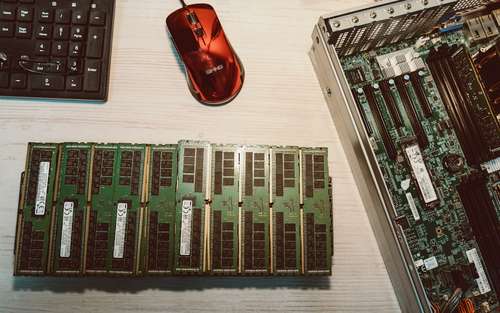
To understand Patel's immense frustration, you have to look at the unprecedented supply chain nightmare unfolding across the broader technology sector. The insatiable corporate appetite for artificial intelligence infrastructure has effectively vacuumed up the global supply of High-Bandwidth Memory (HBM) and LPDDR5x. Hyperscalers backed by billions in venture capital are buying up silicon before it is even manufactured. This leaves consumer-facing companies scrambling for scraps at the back of the line.
The three dominant semiconductor giants—Samsung, SK Hynix, and Micron—have completely retooled their production lines to service enterprise AI data centers. In fact, the shift has been so extreme that major brands have begun pulling out of the consumer space entirely, as seen recently with Micron restructuring its iconic Crucial consumer division. Over the past twelve months, the cost of basic consumer RAM and NAND flash storage has surged, with some modules seeing price hikes of up to 500 percent.
The Disproportionate Impact on Modular PC Builders
These catastrophic PC hardware shortages have devastated smaller, boutique builders who lack the supply-chain leverage of tech monoliths. Framework itself recently had to announce inevitable price hikes on its desktop mainboards and laptops. The company held off as long as mathematically possible before finally succumbing to the market reality earlier this year. Without billions of dollars in guaranteed orders, startup hardware manufacturers are struggling to simply stay in production.
A Forced March Toward Subscription Gaming Models
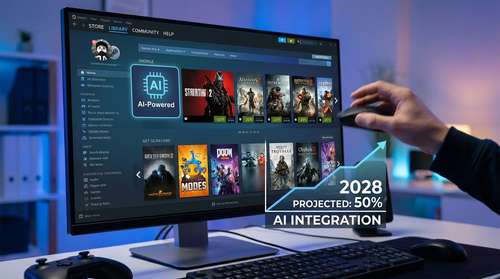
Instead of fixing the hardware bottleneck for end-users, industry titans are adapting by leaning into the scarcity. Market analysts note that executives at massive PC conglomerates are already envisioning a "hybrid" computing reality. In this environment, heavy processing loads are offloaded to remote servers to offset the astronomical cost of local processors and memory.
Consequently, this architectural shift guarantees an endless, recurring revenue stream for big tech. Personal computing evangelists warn this dynamic will trap consumers in a perpetual cycle of expensive, Netflix-style cloud access. You will no longer upgrade your graphics card; you will simply pay a higher monthly premium to unlock the "Ultra Performance" tier on a remote server farm.
Fighting Back Against a Cloud Gaming Future
Is the standalone gaming rig genuinely dead? Framework certainly doesn't think so, but the window for meaningful intervention is narrowing rapidly. Despite the bleak economic landscape, Patel's manifesto ultimately served as a rallying cry ahead of the company's highly anticipated "Next Gen" launch event, slated for April 21 at 10:30 AM PT in San Francisco. The modular hardware pioneer vowed to keep fighting the broader industry trend of glued-together, non-upgradeable black boxes.
Recent teasers for the April showcase, cryptically titled "Follow the white penguin," have even hinted at deep Linux integrations for their upcoming machines, offering an alternative to mainstream operating systems. Framework's ultimate goal remains fiercely countercultural: hardware that guarantees privacy, deep customization, and complete consumer autonomy. "No matter how inevitable the AI-takes-all scenario may sound, as long as there is a person who still wants to own their means of computation, we will be here," reads a key passage from their April announcement.
For PC enthusiasts and everyday consumers alike, the stakes have truly never been higher. Whether the hardware community can weather this unprecedented financial storm without surrendering to total cloud monopolization remains the defining technological battle of the decade. Securing the right to repair and upgrade your own machine is no longer just a tinkerer's crusade—it has become a desperate fight for the very survival of digital ownership.