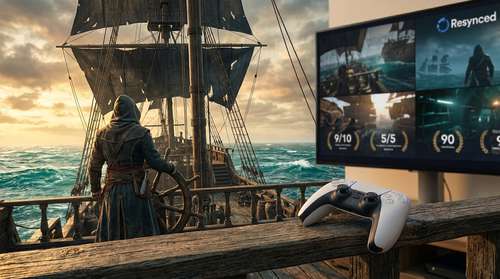
After years of mounting anticipation and multiple delays, Pearl Abyss has finally delivered its magnum opus. Released globally on March 19, 2026, the game is already breaking records, surging past two million copies sold in its first 24 hours. In this definitive Crimson Desert review, we evaluate whether Kliff Macduff's brutal journey across the sprawling continent of Pywel lives up to the monumental hype. While the studio's proprietary BlackSpace Engine delivers a visually breathtaking and intensely physical combat experience, it does not come without a significant cost. For all its triumphs as a cinematic single-player epic, the launch is currently polarized by severe technical friction on mid-range setups, sparking intense debates across the gaming community.
A Monumental Achievement in Open-World Design
The scale of the environment is nothing short of staggering. If you are searching for a comprehensive Pywel open world guide, the first and most vital lesson is simply learning to navigate the map's immense verticality. Pearl Abyss has crafted a seamless world that dwarfs modern genre staples, transitioning smoothly from the snow-capped peaks of the northern mountain ranges to sprawling medieval cities without a single loading screen interrupting the immersion.
You play as Kliff, a beleaguered mercenary attempting to rebuild the scattered Greymanes faction. Rather than ushering you from point to point with glowing markers, the game demands genuine exploration. Traversal mechanics evolve dramatically as you progress; early hours spent on horseback eventually give way to fluid gliding mechanics, utilizing the Axiom Force grappling hook, and even taming massive wyverns and fire-breathing dragons. The world feels remarkably alive, populated by dynamic weather systems and a 'Hero Contribution' reputation mechanic that rewards you for organically engaging with local factions and side quests rather than just chasing the main narrative.
Physics-Based Combat That Rewrites the Rules
When swords clash in this game, you feel the sheer impact. Unlike the synchronized dodging of traditional action games, the combat system leans heavily into physics-driven brawling. You can seamlessly transition from swinging a heavy broadsword to tackling a heavily armored knight off a cliff edge.
Enemies react dynamically to the environment. Grappling, wrestling, and utilizing environmental hazards are essential survival tactics, especially when facing massive, large-scale bosses like the towering White Horn. The combat is unapologetically brutal, requiring tactical positioning and precise timing over mindless button-mashing. Furthermore, the progression system avoids traditional level-ups. Instead, you collect Abyss artifacts to upgrade a flexible skill tree, allowing you to re-spec on the fly if a particular encounter demands a tankier build or more reliance on elemental magical abilities. There is also a brilliant observation mechanic that lets Kliff permanently learn new combat maneuvers simply by watching an enemy execute them in battle, bypassing the need to spend skill points altogether.
Hardware Struggles and the Crimson Desert Gameplay Controversy
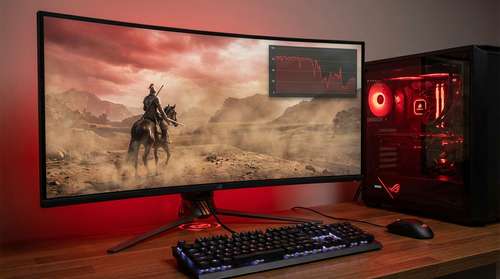
For all its mechanical brilliance, the technical execution on the PC platform is currently sparking massive debate. The main Crimson Desert gameplay controversy isn't about the game mechanics themselves, but rather who can actually experience them smoothly. The BlackSpace Engine pushes modern hardware to its absolute breaking point, and the optimization at launch leaves much to be desired.
Players investigating the official Crimson Desert system requirements are finding that the 'recommended' specifications barely scratch the surface of what is genuinely needed for a stable 60 frames per second at 1440p resolution. Mid-range rigs are struggling immensely, and there is a specific, well-documented issue surrounding Intel GPU support that has plagued the first week of release. Crimson Desert PC performance requires an undeniably high-end setup; anything less results in heavy stuttering during large-scale cinematic battles or when rendering the dense, seamless environments of bustling cities. Pearl Abyss has acknowledged the widespread feedback and promised rapid post-launch patching, but right now, your silicon will dictate your enjoyment.
The Verdict on One of the Best RPGs of the Year
Despite the glaring optimization hurdles, it is impossible to deny the sheer ambition on display here. The narrative takes surprising, grounded turns, avoiding high-fantasy tropes in favor of gritty, consequence-heavy storytelling. When the framerate holds steady, the visceral combat and boundless exploration coalesce into a truly generational gaming experience.
It easily stands among the best RPGs 2026 will deliver, assuming you have the processing power to run it. The deep crafting, cooking, and life-sim mechanics provide countless hours of distraction from the main campaign, ensuring that every type of player finds their niche. If you are equipped with top-tier hardware or playing on a current-generation console where performance is more stable, this is an absolute must-play. For those on older rigs, it might be worth waiting for a few optimization patches before stepping into the unforgiving lands of Pywel.