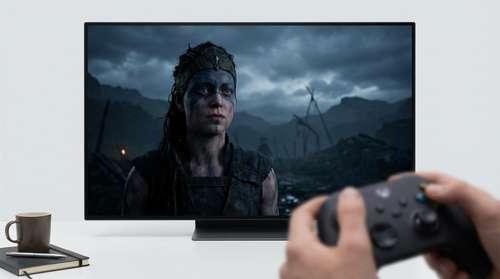
The long-awaited arrival of Microsoft’s highly anticipated cinematic action-adventure has finally dropped, and the initial Hellblade 2 review wave paints a fascinating picture of a deeply polarizing masterpiece. Seven years after the original game shattered expectations for independent AAA development, Ninja Theory has returned with a sequel that doubles down on narrative intensity. Yet, while critics universally praise its jaw-dropping visual fidelity, a massive debate has ignited over its six-hour runtime and minimalist approach to interactivity.
An Unmatched Xbox Series X Graphics Benchmark
If there is one absolute consensus among critics, it is that Senua’s latest journey through 9th-century Iceland is a technological marvel. Setting a new Xbox Series X graphics benchmark, the title utilizes Epic Games' latest technology to create some of the most photorealistic environments ever rendered in real-time. Among the current crop of Unreal Engine 5 games, this stands out as a generational leap.
Reviewers from outlets like Digital Foundry and IGN have noted that the integration of MetaHuman technology and Lumen global illumination gives the character models and lighting an almost film-like quality. Every grimace of pain and bead of sweat on Senua's face is flawlessly captured. Ninja Theory has delivered an artistic triumph that pushes console hardware to its absolute limits, even capping the framerate at 30 frames per second on consoles to meticulously maintain that cinematic vision without dropping visual fidelity.
Industry-Leading Binaural Audio
Beyond the breathtaking graphics, the studio's award-winning sound design makes a triumphant return. The unsettling, overlapping voices of the Furies constantly whisper in your ear through expert binaural audio techniques. This approach offers an authentic, carefully researched depiction of psychosis that remains unrivaled in the gaming industry, heightening the tension of every single encounter.
Senua's Saga Hellblade II Gameplay: Style Over Substance?
The controversy truly begins when critics peel back the stunning presentation to analyze the core mechanics. The baseline Senua's Saga Hellblade II gameplay remains deliberately simplistic, which has left some reviewers wanting substantially more from the experience. The perspective-based visual puzzles from the first game return largely unchanged, often acting as mere atmospheric speed bumps between narrative beats rather than challenging brain-teasers. Furthermore, combat is heavily restricted to scripted, one-on-one duels. You cannot fight multiple enemies simultaneously; instead, the camera elegantly pans from one brutal execution to the next opponent stepping into the fray.
While some reviewers argue that this mechanical simplicity keeps the focus squarely on the psychological horror and narrative tension, others are far less forgiving. GameSpot noted that the title sometimes feels afraid of being an interactive video game, criticizing the heavy reliance on slow walking sequences and a stark lack of mechanical evolution. Every sword swing feels incredibly weighty and visceral, largely thanks to meticulous motion capture, but players looking for deep skill trees, dodge-cancel mechanics, or varied enemy encounters will likely find themselves frustrated by the limitations.
The Debate Around Hellblade 2 Game Length
Another major point of contention in the current review discourse is the Hellblade 2 game length. Clocking in at around six to eight hours depending on your puzzle proficiency and desire to hunt down hidden lore totems, it is roughly the same length as its 2017 predecessor.
In an era where massive open-world titles demand dozens of hours from players, a tight, focused narrative can be incredibly refreshing. IGN praised the slender runtime, noting that the game never wastes a single second of its pacing, purposefully avoiding the bloated side-quests that heavily drag down other modern releases. However, for a flagship title that took roughly half a decade to develop, some gamers and critics question the sheer volume of content provided upon delivery. This has sparked valid conversations regarding the sustainability of AAA development cycles. Fortunately, its day-one inclusion on the Xbox Game Pass subscription service softens the blow for those hesitant to pay full retail price for a single-weekend experience, changing the value proposition entirely.
Hellblade 2 Scores: What the Critics Are Saying
Taking a broader look at the general reception, the aggregated Hellblade 2 scores reflect the industry's divide over cinematic experiences versus traditional game design. Reading through any comprehensive Hellblade 2 review from major outlets reveals a clear dichotomy. Sitting comfortably in the low 80s on Metacritic, the spread of individual ratings is remarkably wide and varied:
- Eurogamer (5/5): Awarded a perfect score, calling it a phenomenal and confident sequel that pushes the interactive medium forward.
- IGN (8/10): Praised the spellbinding spectacle and story surprises, acknowledging the simple combat but lauding the forward momentum.
- Game Informer (9/10): Celebrated the developers for not blowing the formula out of proportion, calling it a much better, refined Hellblade.
- GameSpot (6/10): Deducted points for repetitive gameplay loops and a frustrating lack of meaningful interactive evolution.
- Washington Post (6.3/10): Described it as an eye-popping visual experience but ultimately wished there was more to actually say and do.
The Final Verdict on Ninja Theory's Sequel
Your personal enjoyment of Ninja Theory's latest project will ultimately hinge on what you value most in interactive entertainment. If you view video games as a storytelling medium meant to evoke visceral emotional reactions through cutting-edge presentation, Senua’s latest descent into darkness is an absolute must-play. However, if you strictly measure a title's worth by deep, replayable mechanical systems, you might find the experience beautiful but somewhat hollow. Regardless of where you personally stand on the gameplay debate, there is absolutely no denying that this sequel has firmly secured its place as one of the most visually defining releases of this console generation.