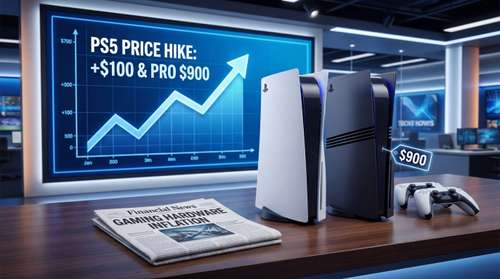
Sony Interactive Entertainment has officially announced a sweeping PS5 price increase in 2026, catching the gaming industry completely off guard. Effective April 2, consumers worldwide will see the cost of PlayStation 5 hardware jump by up to $100. This controversial decision marks a historic moment in console gaming, driven by volatile economic conditions and skyrocketing manufacturing costs. Adding to the sticker shock, Sony confirmed the PlayStation 5 Pro MSRP will launch at a staggering $900, setting a new ceiling for premium home consoles.
Shoppers who have delayed upgrading their living room setups face a rapidly closing window. This Sony console price hike impacts the entire current-generation hardware lineup, including the base consoles, the upcoming Pro model, and even the PlayStation Portal remote player. Here is a comprehensive breakdown of the breaking Sony PlayStation news today and what it means for your wallet.
The Unprecedented $100 PS5 Price Hike
Console generations traditionally see price drops as manufacturing processes become more efficient over time. The PlayStation 5, however, is charting a drastically different course. Starting April 2, 2026, the retail price for existing PS5 models will surge by up to $100 across major global markets.
Under the revised pricing structure, the PS5 Digital Edition will jump from $500 to $600, while the standard PS5 equipped with a disc drive will climb to $650. Accessories are not immune to this wave of pricing adjustments, either. The PlayStation Portal, Sony’s popular remote-play handheld, will see its retail cost inflated from $200 to $250.
This is the second time in less than a year that Sony has adjusted its hardware costs upward, following a smaller $50 hike the previous August. The sheer scale of this adjustment has frustrated late adopters who expected the console to become more affordable five years into its lifecycle.
PS5 Pro $900 Price: A New Era for Premium Hardware
Alongside the adjustments to the base models, Sony finalized the launch details for its mid-generation powerhouse. The PS5 Pro $900 price tag makes it one of the most expensive mainstream gaming consoles ever released. Aimed squarely at hardcore enthusiasts, the Pro model promises advanced features like PlayStation Spectral Super Resolution (PSSR) and heavily upgraded ray-tracing capabilities.
At nearly a thousand dollars before taxes and essential accessories, the new Pro system pushes the boundaries of what the console market will tolerate. While the hardware under the hood rivals mid-to-high-tier gaming PCs, the psychological barrier of a $900 console is sparking fierce debate across social media and gaming forums.
Industry analysts note that this premium tier is designed for a highly specific audience willing to pay top dollar for uncompromised performance. Still, for the average consumer, the entry barrier to top-tier PlayStation gaming has never been higher.
What is Driving Gaming Hardware Inflation?
The immediate question on every player's mind is why this is happening now. In an official statement, Sony justified the hikes by pointing to "persistent pressure in the global economic landscape". The company claims these measures are strictly necessary to continue delivering high-quality, innovative gaming experiences.
Behind the corporate messaging, several macroeconomic factors are fueling this relentless gaming hardware inflation:
- Supply Chain and Memory Costs: The tech sector is currently grappling with skyrocketing prices for RAM and DRAM components, tightly squeezing hardware profit margins.
- Global Trade Tariffs: Recent international trade policies and new tariffs introduced earlier this year have heavily impacted the cost of importing electronics into the United States and Europe.
- Currency Fluctuations: Volatile exchange rates have historically forced Sony to adjust pricing in regions like Japan and the UK, but the current economic climate is forcing a global recalibration.
Sony is not navigating these turbulent waters alone. Microsoft recently increased the prices of its Xbox Series X/S consoles and official accessories to offset similar manufacturing hurdles. Meanwhile, Nintendo quietly bumped the price of the aging Switch from $300 to $340, a direct response to the recent imposition of international trade tariffs that are shaking up the consumer electronics market. The entire industry is aggressively shifting the burden of rising production and logistics costs directly onto the consumer.
Should You Buy PS5 Before the Price Increase?
With the April 2 deadline looming, the consensus among financial experts and gaming enthusiasts is clear: you need to buy PS5 before price increase policies take full effect. Major retailers are currently honoring the original MSRP, but inventory is expected to evaporate quickly as shoppers rush to secure consoles at the lower rate.
If you are considering a purchase, do not wait until the end of the month. Retailers frequently update their inventory systems ahead of official dates, and panic buying will likely lead to widespread stock shortages. Securing a digital or standard console today guarantees you will save up to $100—money better spent on an extra DualSense controller or a new blockbuster game.
Looking Ahead: The Future of Console Pricing
The events of March 2026 mark a paradigm shift for the video game industry. The traditional model of hardware serving as a cheap entry point to sell lucrative software is fracturing under the weight of modern economic realities. If companies can no longer subsidize the cost of advanced internal components, $600 base consoles and $900 premium upgrades may become the new standard.
As we look toward the inevitable PlayStation 6, gamers must brace for a reality where the hobby requires a significantly larger financial investment. For now, the spotlight remains firmly on Sony as the community digests this historic pricing overhaul and scrambles to secure hardware before April 2.