A bombshell leak has just reshaped everything we thought we knew about Sony's next console generation. If you were expecting a simple hardware bump for the next cycle, prepare for a major shift. The biggest PS6 leak 2026 has delivered so far surfaced this week, revealing that Sony is aggressively pushing toward a unified hardware ecosystem. According to new developer documentation and industry insiders, this ecosystem includes a highly capable native portable device and a revolutionary cross-generation software tool.
Hardware analysts and data miners have uncovered significant updates in the latest PS5 Software Development Kit (SDK 13). These backend changes explicitly detail the PlayStation 6 specs, a dedicated portable companion, and a brand-new asset management system. Let's break down what this means for the future of PlayStation.
The Sony PS6 Handheld: A True Portable Powerhouse
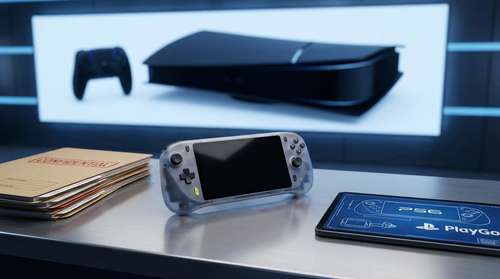
For years, gamers have begged for a true successor to the PlayStation Vita. While the PlayStation Portal offered a solid cloud-streaming stopgap, this new leak confirms Sony is building a dedicated, native Sony PS6 handheld. Codenamed 'Canis', the device will reportedly share a direct architectural foundation with the main home console.
The smoking gun comes from a seemingly innocuous update to the PS5's Power Saver Mode. Hardware insiders, including the prominent leaker Moore's Law is Dead, noted that Sony recently patched old SDKs specifically to optimize for this mode. Internal documentation reveals this is actually a Trojan Horse compatibility layer designed to make current and future games run seamlessly on portable hardware without requiring developers to build entirely separate ports.
Handheld CPU and GPU Specs
Based on the April 2026 data dumps, we finally have concrete PS6 hardware details for the mobile unit. The handheld is targeting an 8-thread architecture designed for aggressive power efficiency:
- CPU Configuration: 4x AMD Zen 6c cores paired with 2x Zen 6 Low Power cores.
- GPU Performance: Expected to utilize RDNA 5 architecture with robust ray tracing capabilities that reportedly outperform the Xbox Series S in raw rasterization.
- Upscaling: Heavy integration of PlayStation Spectral Super Resolution (PSSR), allowing 1080p or 1440p portable displays to output incredibly crisp visuals with a fraction of the compute power.
The 'PlayGo' Feature: Sony's Answer to Smart Delivery
Perhaps the most consumer-friendly revelation from this week's leak is the introduction of the PlayGo feature. Found deeply embedded in SDK 13, PlayGo is Sony's equivalent to Xbox's highly praised Smart Delivery system, but engineered specifically for a multi-tiered hardware environment.
Currently, when you download a major AAA title on a standard PS5, you are often forced to install massive 4K textures and high-fidelity assets meant for the PS5 Pro. PlayGo changes this completely. The system allows developers to segment game files into distinct chunks. If you are downloading a game onto the rumored PS6 handheld, PlayGo will only pull the specific compressed textures and lower-resolution assets needed for that screen.
As modern game file sizes balloon past the 150GB mark, managing storage has become a nightmare for players. PlayGo isn't just a convenience; it is a necessity for a portable console where massive NVMe SSDs are expensive to integrate. By serving customized asset packages, players won't be wasting precious bandwidth downloading unplayable files. It fundamentally changes how the PlayStation Network distributes data globally.
Accelerated PlayStation 6 Release Date and Price Surprises
Among the most shocking next-gen console rumors is the revised launch window. Previously, industry consensus pointed to a 2028 or 2029 launch due to global RAM shortages and economic constraints. However, multiple leakers now suggest that the PlayStation 6 release date is firmly on track for Holiday 2027.
To meet this aggressive timeline, production is rumored to begin in mid-2027. Sony's urgency reportedly stems from a desire to establish this new hybrid ecosystem before competitors can firmly entrench themselves in the high-end handheld market. Furthermore, this accelerated launch means current PS5 owners might see the cross-generation overlap begin sooner than expected. The inclusion of full backward compatibility ensures early adopters won't lose access to their massive digital libraries when making the jump to the new ecosystem.
Even more surprising is the projected pricing strategy. Because Sony is allegedly adopting a unified chiplet design and streamlining both the cooling and power supply components, production costs have plummeted. Early bill-of-material estimates suggest the base PS6 could retail for less than the current PS5 Pro. By focusing on smart software scaling and efficient architecture rather than pure, brute-force raw wattage, Sony aims to make the generational leap far more accessible.
Looking Ahead at Sony's Next Era
This week's data dump paints a fascinating picture of where gaming is heading. Sony is clearly watching the massive success of the Steam Deck and Nintendo Switch, realizing that high-fidelity gaming can no longer be chained to a living room television. By seamlessly blending home console power with the new portable ecosystem via PlayGo, the PS6 generation is shaping up to be Sony's most ambitious hardware strategy since the PS2 era. We will continue monitoring these leaks as more developer documents surface ahead of next year's official announcements.