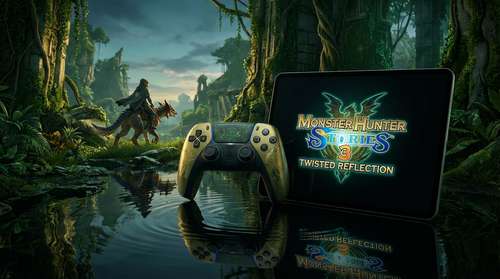
Capcom’s highly anticipated creature-collecting spin-off has finally launched, and our comprehensive Monster Hunter Stories 3 review reveals a game that completely transcends its predecessors. Arriving on March 13, 2026, Twisted Reflection abandons the youthful innocence of the first two titles in favor of a gripping, emotionally resonant narrative. By blending innovative ecosystem mechanics with exceptionally refined turn-based combat, the developer has crafted an adventure that demands your undivided attention. Whether you are a veteran Rider or a newcomer seeking the ultimate creature-taming experience, this latest entry easily secures its rightful place among the best RPGs March 2026 has to offer.
A Mature Narrative: The Fate of Azuria and Vermeil
For the first time in the franchise's history, players step into the boots of an adult, fully-voiced protagonist. The storyline centers on the deeply rooted, bitter conflict between two adversarial kingdoms: Azuria and Vermeil. Both proud nations currently face a terrifying environmental catastrophe known as the "Crystal Encroachment," a disaster slowly suffocating the world's ecosystems.
As the royal heir to Azuria, you must form an uneasy political alliance with Vermeil's Princess Eleanor. Together, you investigate the miraculous discovery of a Rathalos egg—a majestic species previously thought to be entirely extinct. The emotional weight of this narrative provides a stark contrast to the lighthearted charm of previous games. The stakes feel monumental, and the interpersonal drama between the kingdoms offers impactful beats that rival many mainline cinematic experiences. Capcom clearly wanted to age up the franchise alongside its dedicated fanbase, and the risk has paid off tremendously.
Twisted Reflection Gameplay Analysis & Environmental Mechanics
Any deep Twisted Reflection gameplay analysis must immediately highlight the phenomenal evolution of its battle system. You still command an active party of up to six Monsties, utilizing classic weapons and armor forged from fallen beasts, but the strategic layers have significantly expanded. Battles feel brutally challenging during the mid-game, requiring careful synergy between your Rider's tactical commands and your companions' natural abilities.
However, the true standout addition is the highly praised 'Habitat Preservation' system. Instead of merely hunting for survival or sport, players are tasked with actively healing the devastated environment. Clearing dangerous Crystal Encroachment zones naturally allows local flora and fauna to return to the region. The mechanics are so intricately layered that the community is already clamoring for a definitive Monster Hunter habitat restoration guide to optimize their world-building progress. Reviving these diverse biomes directly impacts gameplay, unlocking rare monster eggs, unique genetic splicing traits, and hidden den lairs that are otherwise inaccessible. It transforms the typical open-world busywork into a highly rewarding loop of ecological conservation.
Monstie Genetics and Deep Customization
Fans of the Rite of Channeling will be thrilled to see the return of the gene-splicing mechanic, now more robust than ever. Customizing your Monsties to carry unexpected elemental attacks remains incredibly addictive. The user interface has seen a massive overhaul, streamlining the process of passing down rare bingo board genes without dumbing down the mathematical depth that hardcore players love. You will easily lose dozens of hours simply optimizing your perfect combat team to tackle the challenging post-game dens.
Monster Hunter Stories 3 Switch 2 vs PC Performance
When evaluating the technical achievements of this release, the Monster Hunter Stories 3 Switch 2 vs PC debate presents a fascinating narrative for hardware enthusiasts. Capcom built the game to shine on modern displays, boasting a breathtaking anime aesthetic that strongly channels the visual vibrancy of Studio Ghibli. On Nintendo's newest console, the optimization is practically flawless. The vibrant biomes, seamless transitions, and complex combat animations run beautifully. Consequently, it has become a frequent benchmark in recent Switch 2 exclusive game reviews—often dominating the conversation despite the title actually enjoying a broader multiplatform release.
Conversely, while high-end PC rigs can push the resolution and framerates slightly higher, the Steam launch has been frustratingly marred by early technical woes. Numerous players report experiencing crashes and distinct stuttering when transitioning between the massive open-world maps. For now, Nintendo's hardware offers the most stable, visually cohesive, and uninterrupted way to experience this 75-hour epic.
The Final Verdict: Capcom Monster Hunter Stories 3 Score
Capcom has masterfully balanced genre accessibility with hardcore RPG mechanics. Twisted Reflection honors the beloved monster-taming gameplay loop while taking daring, successful risks with its adult protagonist and sophisticated environmental themes. Reflecting the widespread critical acclaim across the industry, the official Capcom Monster Hunter Stories 3 score currently sits at a mighty 85 on Metacritic, cementing its status as a genre-defining masterpiece.
If you have been waiting for a sweeping, character-driven adventure that perfectly marries tactical monster battles with a beautifully realized world, your hunt is officially over. Reading any Monster Hunter Stories 3 review will tell you the same thing: this is an absolute triumph that will keep you engaged long after the credits roll.