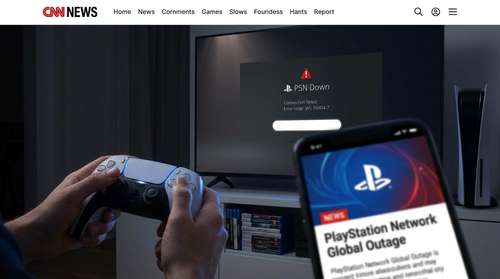

The gaming community is bracing for unprecedented turbulence as consumer frustration reaches a boiling point over the erosion of media ownership. Scheduled to hit the industry later this summer, the PlayStation boycott August 2026 is rallying thousands of dedicated gamers to power down their consoles and close their wallets. Organized heavily on social media under the trending #PSBlackout campaign, this massive week-long strike aims to protest Sony's controversial pivot toward a purely digital ecosystem. With digital storefronts gaining absolute control over what players can and cannot access, users are uniting to take a stand regarding their purchasing rights.
Inside the #PSBlackout Campaign
Spearheaded by the prominent game preservation community known as "Does It Play?"—a group that actively tests and documents the offline playability of disc releases—the #PSBlackout campaign is being described as a total "economic and gameplay blackout". The grassroots organizers are urging all participants to log out of the PlayStation Network (PSN) starting Sunday, August 23, 2026, at 7:00 PM local time, and stay entirely offline until Sunday, August 30, 2026, at 7:00 PM.
The rules of this upcoming PlayStation Network blackout week are strict, focusing on starving the platform of key engagement metrics:
- Keep all PlayStation consoles powered down or remain completely logged out of PSN.
- Halt all digital spending, including game purchases, add-on DLCs, and microtransactions.
- Pause all PlayStation Plus subscription renewals and refrain from interacting with the PlayStation Store ecosystem entirely.
Organizers strategically designed the protest to target Sony's internal player engagement and revenue dashboards rather than punishing individual developers. By keeping player counts and transaction numbers artificially low for an entire week, the group hopes to trigger executive-level alarm bells regarding the overall direction of the PlayStation brand. The logic is simple: hit the data-driven corporate dashboards where it actually hurts.
The Catalyst: Sony Digital Only Future 2028
While the protest addresses several different grievances, the primary catalyst fueling the outrage is the looming reality of a Sony digital only future 2028. Widespread reports indicate that Sony plans to completely cease the production of physical game discs by January 2028. This discontinuation marks a drastic acceleration toward the permanent end of physical media gaming, sparking intense anxiety over long-term consumer rights, digital monopolies, and the preservation of gaming history.
The fierce debate surrounding physical vs digital games ownership has never been more relevant than it is right now. When you purchase a physical game disc, you own a tangible product that you can resell, lend to friends, or play decades after the console's authentication servers inevitably shut down. The thriving second-hand market has historically kept gaming affordable for millions. Conversely, a digital purchase is effectively just a revocable, long-term rental license. As recent controversial removals of digital television shows and movies from user libraries have proven, centralized storefronts can easily revoke access to digital media at any time without offering refunds.
By forcing the impending Sony physical game discs discontinuation, critics argue that the hardware giant is deliberately killing the second-hand market and turning video games into an exclusionary hobby. Eliminating used games effectively traps consumers in a closed ecosystem where Sony entirely controls the pricing, sales, and availability of every single title.
A Broader Disconnect With the Community
The fight for physical media is merely the tipping point for the #PSBlackout movement. The preservation group notes that player frustration spans multiple facets of Sony's recent business strategy. Fans cite a string of recent studio closures, aggressive hardware and subscription price increases, canceled fan events, and halted development momentum for the costly PS VR2 headset.
Many longtime supporters feel the corporation has become increasingly disconnected from its core audience, prioritizing failed live-service investments over the single-player legacy franchises—like SOCOM, Sly Cooper, and Resistance—that originally built the platform. To capture this widespread sentiment, a petition demanding Sony protect the physical disc market has quickly gathered more than 345,000 signatures, illustrating a profound lack of trust in corporate digital stewardship.
Will the PlayStation Network Blackout Week Work?
Despite the growing momentum and massive social media visibility, industry analysts remain highly skeptical about the boycott's potential financial impact. Disrupting an internal metric dashboard is one thing, but making a measurable dent in a global corporate machine is another entirely.
The PlayStation Network currently boasts a staggering user base of over 120 million active accounts. Even if all 345,000 petition signers participate flawlessly, they represent a mere 0.2 percent of the total active user base. Some industry critics have even pointed out that a slight dip in user activity might ironically save Sony money by temporarily reducing server load costs. Currently, Sony is employing a "wait it out" PR strategy, refusing to engage with the social media drama and keeping regional promotional accounts running as usual to spread protesters thin.
Furthermore, the timing of the strike has faced heavy scrutiny from commentators. The August 23-30 window does not overlap with any major first-party Sony game launches, meaning baseline engagement might already be relatively quiet. However, the boycott dates directly clash with the highly anticipated Call of Duty: Modern Warfare 4 early-access and open beta periods. Convincing millions of casual players to skip one of the year's biggest multiplayer events to support the esoteric cause of physical preservation is an incredibly steep uphill battle.
Whether or not the #PSBlackout campaign forces immediate corporate policy changes, it has undeniably succeeded in reigniting a vital conversation around consumer rights. As the 2028 horizon approaches, the tension between corporate digital strategies and players demanding actual ownership of their libraries will only intensify.