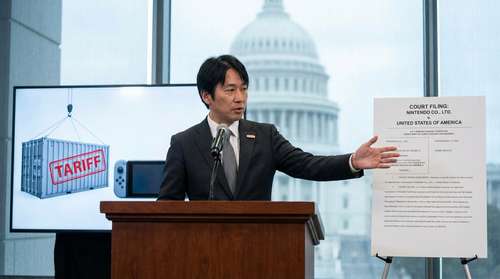
In a bombshell legal maneuver that has sent shockwaves through the gaming and tech industries, Nintendo of America has formally sued the United States government, demanding a full refund of trade tariffs it alleges were illegally collected. The lawsuit, filed Friday in the U.S. Court of International Trade, directly connects these "unlawful" duties to the chaotic delay of Nintendo Switch 2 pre-orders last year, a move the company claims caused "imminent and irreparable harm" to its business and consumers.
Nintendo Challenges "Unlawful" Trade Tariffs in Court
The complaint, lodged against the Department of the Treasury, the Department of Homeland Security, and U.S. Customs and Border Protection (CBP), seeks the return of millions of dollars in duties paid under the International Emergency Economic Powers Act (IEEPA). Nintendo's legal action follows a landmark Supreme Court ruling in February 2026, which struck down the previous administration's use of IEEPA to impose sweeping tariffs on consumer electronics, deeming the executive orders unconstitutional.
According to court documents obtained by GamesVot, Nintendo argues that the government's "initiation and administration of unlawful trade measures" forced the company to scramble its supply chain strategy. "[Nintendo] has been substantially harmed by the unlawful execution and imposition of the unauthorized Executive Orders," the filing states, requesting a "prompt refund, with interest, of any IEEPA duties paid."
When reached for comment, a Nintendo spokesperson offered a brief confirmation: "We can confirm that we filed a request. We have nothing else to share on this topic at this time."
How Tariffs Caused the Switch 2 Pre-Order Delay
For gamers, the lawsuit sheds new light on the frustrating uncertainty that surrounded the Nintendo Switch 2 launch in early 2025. The console, which ultimately released on June 5, 2025, faced a sudden and unexplained delay in its pre-order window, originally scheduled for April 9, 2025.
At the time, Nintendo cited vague "evolving market conditions." However, the new lawsuit clarifies that the abrupt postponement was a direct response to the implementation of aggressive tariffs on goods imported from key manufacturing hubs like Vietnam and China. These tariffs, announced during the "Liberation Day" trade event in April 2025, placed an immediate financial burden on hardware imports.
The Cost to Consumers
While Nintendo successfully maintained the Switch 2 console's base price at $449.99 (and $499.99 for the Mario Kart World bundle), the company was forced to pass other costs onto consumers. Prices for next-gen accessories, including the Switch 2 Pro Controller and Joy-Con 2 Pair, saw significant hikes at launch—increases the company now tacitly attributes to these trade levies.
Industry-Wide Fallout and What Comes Next
Nintendo is not fighting this battle alone. The Japanese gaming giant joins a coalition of over 1,000 major corporations, including FedEx and Costco, who have filed similar "me-too" lawsuits following the Supreme Court's decision. Legal experts predict the U.S. government could face a liability bill exceeding $166 billion if all refunds are processed.
The U.S. Customs and Border Protection agency has stated that a refund mechanism is in development but may take up to 45 days to become operational. Meanwhile, the threat of trade instability remains; following the Supreme Court's dismissal of the IEEPA tariffs, a new, legally distinct 10% global tariff rate has already been proposed, threatening to reignite gaming industry trade tariff tensions.
As the legal battle unfolds throughout 2026, the outcome could set a massive precedent for how multinational tech companies protect their supply chains from erratic trade policy. For now, Nintendo is focused on recouping its losses, while fans hope the refund victory might stabilize prices for future hardware revisions.