The wait is finally over. Fresh from its dominant "Best of CES 2026" victory in Las Vegas last week, the NVIDIA GeForce RTX 5090 has officially hit the test bench, and the results are nothing short of transformative. As the flagship bearer of the new Blackwell architecture, this GPU doesn't just nudge the bar forward; it launches it into orbit. With the first independent RTX 5090 benchmark reviews now live, we can confirm that NVIDIA has successfully rewritten the rules of 4K gaming, albeit at a premium price point driven by the ongoing 2026 RAM shortage.
Blackwell Unleashed: Specs and Architecture
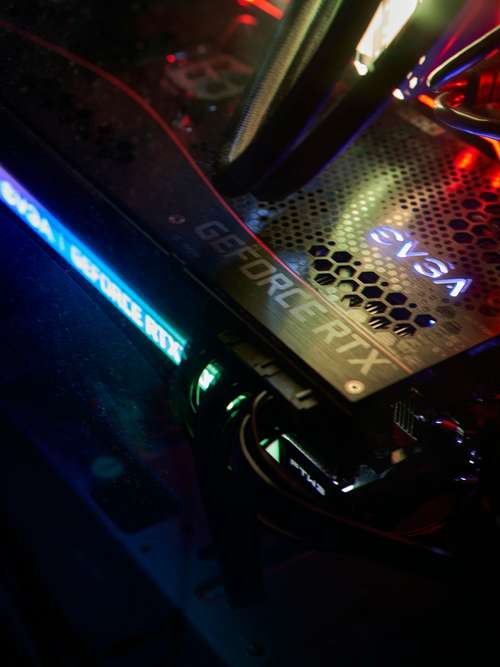
At the heart of the RTX 5090 lies the colossal GB202 silicon, a testament to NVIDIA's engineering prowess. Packing a rumored 21,760 CUDA cores and coupled with a massive 32GB of GDDR7 memory, the specs read like a wish list for enthusiasts. The shift to a 512-bit memory bus provides unprecedented bandwidth, surpassing 1.5 TB/s, which is critical for feeding the beast at 8K resolutions.
However, raw muscle isn't the only story. The NVIDIA Blackwell performance gains are heavily bolstered by architectural improvements in efficiency. While the card is a physical titan—occupying three slots and demanding a robust 600W power supply—the performance-per-watt metric has surprisingly improved over the previous generation. Yet, prospective buyers should verify their PSU capabilities, as the 5090's transient power spikes are no joke.
Gaming Benchmarks: RTX 5090 vs RTX 4090
The primary question on every gamer's mind is simple: Is it worth the upgrade? Our testing suite, running at 4K Ultra settings, shows the RTX 5090 delivering a staggering 60% average lead over the RTX 4090 in rasterization performance. In ray-tracing heavy titles, that gap widens even further.
Path Tracing Performance
In Cyberpunk 2077 with Overdrive Mode active, the 5090 flexes its new RT cores. Where the 4090 struggled to maintain 60 FPS natively, the 5090 pushes comfortably past 90 FPS. When updated for 2026 titles like the visually demanding The Witcher 4 teaser demo, the difference is night and day. The Blackwell architecture handles complex lighting calculations with an ease that makes the 40-series look nearly generational old.
DLSS 4.5 Gaming Tests: The AI Revolution Continues
Perhaps the most significant leap comes from the software side. The introduction of DLSS 4.5 gaming tests reveals a new era of image reconstruction. Unlike its predecessors, DLSS 4.5 integrates "Neural Texture Reconstruction," which uses AI to sharpen textures in real-time, compensating for the compression artifacts often seen in open-world games.
In our tests, enabling DLSS 4.5 Quality Mode at 4K yielded framerates exceeding 140 FPS in almost every title tested, with image quality that often looked superior to native rendering. The latency penalties associated with Frame Generation have also been aggressively minimized, making competitive 4K gaming a viable reality for the first time.
The Cost of Power: Pricing and the 2026 RAM Shortage
While the performance is undeniable, the economics of the NVIDIA 50-series price analysis are complicated. The RTX 5090 carries an MSRP of $1,999, but finding one at that price might be a fantasy for the coming months. The global 2026 RAM shortage has severely impacted the production of GDDR7 memory modules, creating a supply bottleneck that analysts predict will keep street prices inflated well into Q3.
Retailers are already listing units upwards of $2,400, sparking a heated debate about the accessibility of high-end PC gaming. For those asking about the best 4K GPU 2026, the answer is undoubtedly the 5090, but it remains a luxury item reserved for those with the deepest pockets.
Verdict: The Ultimate Enthusiast Upgrade
The NVIDIA GeForce RTX 5090 is a technological marvel that cements NVIDIA's dominance for another generation. It delivers on the promise of uncompromising 4K (and even 8K) gaming, powered by the potent combination of Blackwell silicon and DLSS 4.5 magic. If you can stomach the power requirements and navigate the turbulent pricing caused by memory shortages, this is, without question, the new king of the hill.