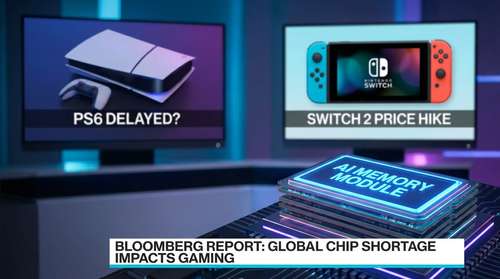
The gaming world was rocked this morning by a startling report indicating that the next generation of consoles may be further away—and more expensive—than anyone anticipated. A major Bloomberg gaming hardware report released today, February 17, 2026, reveals that an intensifying AI memory chip shortage 2026 is wreaking havoc on global supply chains. The fallout? Sony is reportedly forced to delay the PlayStation 6 release date to 2029, while Nintendo is weighing a controversial Nintendo Switch 2 price increase just months after the console's debut.
AI Infrastructure Demand Squeezes Gamers
The root cause of this disruption isn't a lack of innovation, but a global resource war. According to the Bloomberg report, the explosive growth of artificial intelligence infrastructure has created an insatiable demand for high-performance memory chips, specifically DRAM and HBM (High Bandwidth Memory). Tech giants building massive data centers to power large language models are outbidding consumer electronics manufacturers for these critical components.
For gamers, the consequences are stark. Chipmakers are pivoting their production lines to prioritize high-margin enterprise AI chips over the standard GDDR6 and GDDR7 memory used in gaming consoles. This structural shift has created what some industry insiders are calling "RAMmageddon," a supply bottleneck that is driving up bill-of-materials costs for Sony, Nintendo, and Microsoft.
PlayStation 6 Delayed: A Long Wait for Next-Gen
Perhaps the most disappointing news is the timeline shift for Sony's next flagship. Industry whispers previously pegged the PlayStation 6 release date for late 2027, adhering to the company's traditional seven-year lifecycle. However, sources familiar with Sony's internal planning now suggest the console could be pushed back to 2028 or even 2029.
Breaking the Console Cycle
If these reports hold true, the gap between the PS5 (launched in 2020) and the PS6 would stretch to nine years—the longest in PlayStation history. This delay puts immense pressure on the recently released PS5 Pro, which debuted at a steep $750, to carry the generation for another three years. With PS6 specs and leaks hinting at next-level machine learning integration, Sony appears willing to wait for component costs to stabilize rather than launch a crippled or exorbitantly priced system in 2027.
Nintendo Switch 2 Price Hike Likely
While Sony looks to the future, Nintendo faces an immediate crisis. The Nintendo Switch 2, released in mid-2025 to critical acclaim, may see its price tag jump before its first anniversary. The console launched at $449.99—already a significant step up from its predecessor—but soaring RAM costs are eating into Nintendo's margins.
Nintendo President Shuntaro Furukawa has remained tight-lipped about specific figures, but in a statement regarding the "volatile market," he acknowledged that the company is monitoring component pricing closely. Analysts predict a potential $50 increase, pushing the hybrid console to the psychological $500 threshold. This would be a rare move for Nintendo, a company that typically relies on hardware cost reductions over time, not increases.
The Broader Impact: PC Gamers Aren't Safe
The AI-driven memory shortage is not isolated to consoles. PC gamers are already seeing SSD and DDR5 RAM prices creep upward, reversing the downward trends of 2024. The Bloomberg report notes that this "AI tax" is expected to impact everything from graphics cards to handheld gaming PCs throughout 2026.
For now, the message to consumers is clear: if you have been eyeing a Switch 2 or holding out for a price drop on current-gen hardware, waiting might cost you. As the industry grapples with the voracious appetite of the AI boom, the era of cheap, readily available gaming hardware may be on pause.