The wait is finally over. Launching today, February 27, 2026, Resident Evil Requiem marks a pivotal moment for Capcom’s legendary franchise. As the ninth mainline entry, it attempts something remarkably ambitious: fusing the claustrophobic first-person terror of Resident Evil 7 with the kinetic third-person action of RE4. Our full Resident Evil Requiem review finds that while this hybrid experiment carries some risk, the result is a masterful synthesis of survival horror history that stands as a top contender for the best horror games 2026.
A Tale of Two Nightmares: Grace Ashcroft and Leon Kennedy
The narrative backbone of Requiem is built on duality. You aren't just playing one campaign; you are navigating two distinct tonal realities. The story introduces Grace Ashcroft, an FBI analyst and daughter of Outbreak survivor Alyssa Ashcroft, who arrives at the derelict Wrenwood Hotel to investigate a string of mysterious deaths connected to her mother's past. Her segments are played strictly in first-person, emphasizing vulnerability, puzzle-solving, and psychological dread.
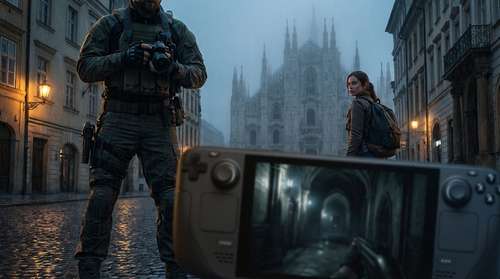
Conversely, the RE Requiem Leon Kennedy gameplay offers a stark, adrenaline-fueled contrast. Dispatched to find a missing officer in the same region, Leon’s chapters switch to the classic over-the-shoulder third-person view. Here, the game flexes its action muscles, allowing players to parry attacks and utilize a wider arsenal. The transition between Grace’s terrified creeping and Leon’s tactical combat feels jarring at first but quickly establishes a compelling rhythm—fear followed by catharsis.
Resident Evil Requiem First Person vs Third Person Gameplay
The Resident Evil Requiem first person vs third person dynamic is more than just a camera swap; it’s a mechanical overhaul. In Grace’s sections, ammo is scarce, and enemies—twisted, fungal-like husks—are nearly impossible to kill, forcing you to run and hide. The sound design here is oppressive, with every creaking floorboard in the Rhodes Hill Chronic Care Center amplifying the tension.
When control shifts to Leon, the game transforms. The RE Engine shines with improved physics and gore systems. Leon feels weightier and more experienced than ever, with a combat style that rewards precision. This "dual-perspective" system successfully answers the long-standing fan debate about which camera style suits the series best: the answer, it turns out, is both. However, purists might find the constant switching disrupts their immersion, a minor critique in an otherwise polished package.
Resident Evil Requiem Switch 2 Performance Breakdown
With the recent launch of Nintendo's new hardware, many fans are asking about the Resident Evil Requiem Switch 2 performance. We tested the game extensively on the new console, and the results are surprisingly robust. Capcom has utilized the Switch 2’s DLSS capabilities to deliver a sharp image that punches above the hardware's weight class.
In docked mode, the game targets a dynamic resolution that reconstructs to a clean 1080p, maintaining a relatively stable framerate that hovers between 45 and 60 FPS. While it lacks the ray-traced reflections of the PS5 and Series X versions, the visual fidelity is intact. Handheld mode is equally impressive, locking in a solid 30 FPS for a consistent portable horror experience. It is arguably the most technically accomplished third-party port we’ve seen on the platform thus far.
Walkthrough Tips and Final Verdict
For those diving in today, a quick Capcom Resident Evil Requiem walkthrough tip: do not play Grace’s sections like a shooter. Conserve your resources for Leon’s chapters where the enemy count triples. Also, pay close attention to the "Mind Palace" mechanic in Grace’s investigation sequences; missing a clue early on can lock you out of the true ending.
Ultimately, Resident Evil Requiem is a bold, confident step forward. By honoring the Grace Ashcroft Resident Evil story with genuine emotional stakes and respecting Leon’s action-hero legacy, Capcom has delivered a game that feels both fresh and nostalgic. It is a terrifying love letter to the franchise's 30-year history and an essential play for 2026.