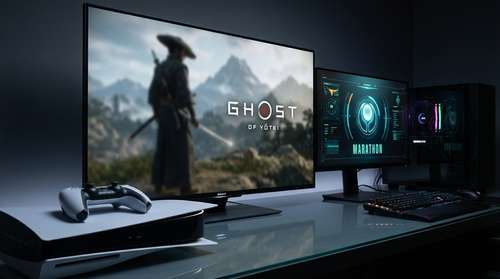
In a stunning reversal that effectively redraws the battle lines of the platform wars, Sony Interactive Entertainment is reportedly pumping the brakes on its expansion into the PC market. A groundbreaking new report from Bloomberg reveals that the company is ending its pursuit of rapid PC ports for flagship single-player titles, pivoting back to a strategy of long-term console exclusivity. While upcoming live-service juggernauts like Bungie’s Marathon will continue to see simultaneous launches, narrative blockbusters—including the highly anticipated PC port of Ghost of Yōtei—are being deprioritized or scrapped entirely to drive hardware sales.
The End of the "PC Push" for Single-Player Games?
According to sources familiar with Sony’s operations, the decision marks a significant departure from the trajectory established over the last three years. Throughout 2024 and 2025, industry observers had noted a shrinking window between PlayStation 5 launches and their arrival on Steam, fueling speculation that Sony was inching toward a day-and-date future for all titles. This new mandate, reportedly handed down by SIE leadership earlier this week, halts that momentum dead in its tracks.
The Sony PlayStation PC strategy has apparently shifted due to internal data suggesting that the availability of exclusives on PC was beginning to cannibalize console ecosystem growth. With the PlayStation 5 entering the mature phase of its lifecycle, Sony is reportedly doubling down on the "garden walls" approach. The report explicitly names the PC version of Ghost of Yōtei—which fans had hoped to see in late 2026—as a casualty of this strategic review. For now, the samurai epic will remain strictly a PS5 experience, with no development resources currently allocated to a port.
Live Service vs. Single Player: A Tale of Two Strategies
While narrative fans face bad news, the company isn't abandoning PC entirely. The distinction in Sony live service vs single player approaches has never been starker. The report confirms that multiplayer titles, which rely on massive player pools to sustain their economies, will remain platform-agnostic.
Marathon's Launch Remains Unaffected
This bifurcation is best illustrated by the imminent Marathon Bungie PC launch. Scheduled to go live tomorrow, March 5, the extraction shooter will still release simultaneously across PS5, Xbox, and PC with full cross-play support. Sony clearly recognizes that for a title like Marathon or the upcoming Marvel Tokon to succeed, it needs the widest possible funnel of players from day one. However, this "open border" policy is now the exception, not the rule, strictly reserved for games designed as perpetual services rather than finite narrative experiences.
Ghost of Yōtei and the "Lost" Steam Ports
The most immediate blow for the PC gaming industry news 2026 cycle is the status of Sucker Punch's latest hit. Following its critical success on PS5 last October, the Ghost of Yōtei PC release date was widely expected to be announced for this year's holiday season. Instead, sources indicate that the project has been shelved indefinitely.
This specific cancellation signals a broader freeze. Other rumored ports, including Housemarque’s upcoming Saros, are now firmly locked to the console. The message to gamers is clear: if you want to play Sony’s prestige output without waiting years—or perhaps forever—you need a PlayStation 5. This move effectively kills the hope of playing PlayStation games on Steam 2026 day-and-date, returning the industry to a pre-2020 status quo where exclusives were truly exclusive.
Looking Ahead: PS6 and the Hardware Defense
Why make this move now? Analysts suggest this retrenchment is a defensive play tied to early PlayStation 6 development rumors. With the next generation of hardware likely targeting a 2028 release, Sony appears keen to re-establish the unique value proposition of its console family. If every major game is available on PC within a year, the incentive to upgrade to a PS6 diminishes significantly.
By securing absolute exclusivity for its single-player library now, Sony is laying the groundwork for a future where its hardware remains the only place to experience the next generation of God of War or The Last of Us. While this may frustrate PC enthusiasts who have grown accustomed to Sony's recent generosity, it suggests a company refocusing on its core identity: a premium, closed-box ecosystem where the games sell the system.