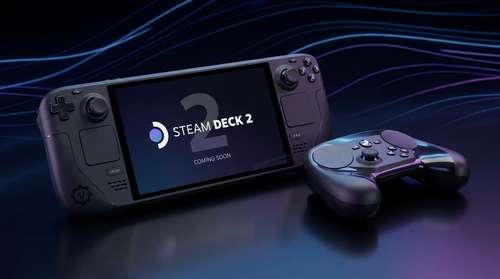
The portable gaming space just received its most anticipated update of the year. Following months of intense industry speculation throughout early 2026, we finally have an official Steam Deck 2 confirmation from the top. Valve has made it entirely clear: the successor to their wildly popular handheld PC is in active development. But if you were hoping for a quick mid-cycle refresh to compete with the latest wave of handhelds, think again. Valve's engineering team is prioritizing a massive architectural jump, refusing to compromise the core experience just to push out iterative new hardware.
Why Valve is Demanding a Generational Leap
In a recent series of interviews rounding out April 2026, Valve software engineer Pierre-Loup Griffais clarified the company's aggressive but patient stance. The engineering team has zero interest in releasing a device that only offers a marginal 20% to 30% performance bump. Instead, they are waiting for a true "generational leap" in computing power.
The current handheld PC gaming news 2026 cycle has been dominated by rapid-fire hardware drops from competitors, but Valve is playing a longer game. They view the Steam Deck more like a traditional console platform, akin to a PlayStation or Xbox. Releasing a successor means delivering a demarcated shift in power that justifies a brand-new target for both game developers and players. The absolute non-negotiable metric? Battery life. Any future silicon must significantly outpace the hyper-efficient 6nm APU found in the current OLED model without draining the battery faster than the standard three-to-12 hour benchmark.
Projected Steam Deck 2 Hardware Specs and Market Rivals
While exact Steam Deck 2 hardware specs remain tightly under wraps, the industry consensus points to a required architectural overhaul. The original Deck is currently powered by a custom Zen 2 and RDNA 2 APU, while the broader industry has already moved on to Zen 4 and RDNA 3. This means Valve is completely comfortable skipping an entire generation to ensure a console-like leap. Rumors suggest that foundational redesigns in graphics architecture—potentially AMD's RDNA 5—could offer the native hardware support needed for advanced AI upscaling and ray tracing without cooking the handheld's battery.
When analyzing the upcoming market clash of the Steam Deck vs Nintendo Switch 2, the differences in corporate strategy are glaring. Nintendo traditionally relies on exclusive IP and broad consumer appeal, while Valve utilizes a lightweight Linux stack to make 15W of power feel like 25W. This software-level efficiency gives Valve the luxury of waiting until the perfect custom silicon is ready, ensuring their next device fundamentally changes what we consider possible in a portable form factor.
Valve Hardware Roadmap: Expanding the Ecosystem
The handheld successor doesn't exist in a vacuum; it arrives alongside a massive revival of the company's physical product lines. The broader Valve hardware roadmap for 2026 is already packed, most notably highlighted by the imminent Steam Controller 2 launch.
Scheduled to hit the market on May 4, 2026, for $99, the new controller is a technical marvel that bridges the gap between traditional console gamepads and PC-centric inputs. It features full drift-proof TMR magnetic sticks, touch-sensitive handles, and a robust 35-hour battery life. Furthermore, it ships with a magnetic charging puck that doubles as a low-latency 2.4GHz wireless receiver. The controller even includes infrared LEDs, a massive future-proofing move that allows it to be tracked by the upcoming Steam Frame VR headset.
How the Steam Controller 2 Influences the Next Handheld
According to Griffais, you can draw a straight line from these new peripherals directly to the next handheld. The ergonomic lessons, input parity, and advanced haptics engineered for the Steam Controller 2 will directly dictate the final layout of the Steam Deck 2. Add in the highly anticipated return of the living-room-focused Steam Machine later this year, and Valve is effectively building an interconnected hardware empire.
Pinning Down the Valve Steam Deck 2 Release Date
So, when can you actually buy one? If you are tracking the Valve Steam Deck 2 release date, you need to adjust your timeline. Because the company's manufacturing resources are currently heavily tied up with the new controller and navigating DDR5 memory shortages for the 2026 Steam Machine, the next-gen handheld is pushed further back in the queue.
Most supply chain analysts and internal leaks point toward a 2027 or potentially 2028 launch window. Prominent hardware leaker KeplerL2 recently suggested that 2028 was an internal target, largely due to the massive chip design requirements. Valve will keep the hardware securely behind closed doors until the requisite processor technology actually exists. Until then, the current Steam Deck OLED remains the definitive way to play your PC library on the go, while the upcoming hardware lineup will bring that precise, tailored experience back to your living room screen.