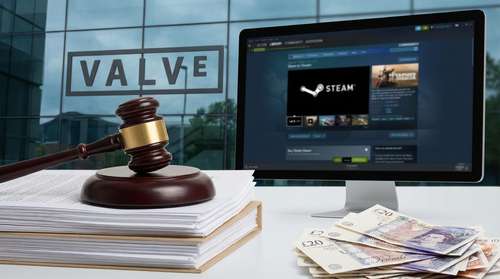
In a seismic shift for the PC gaming landscape, a massive £656 million (approximately $900 million) collective action lawsuit against Valve Corporation has officially been given the green light to proceed to trial. The UK’s Competition Appeal Tribunal (CAT) issued a landmark ruling earlier this week, dismissing Valve’s attempts to throw out the case and certifying the claim on behalf of 14 million UK gamers. If you have purchased a game on Steam since 2018, you could be owed compensation in what is shaping up to be one of the most significant Steam lawsuit payout cases in history.
Tribunal Rules in Favor of Gamers in Historic Decision
On Monday, January 26, 2026, the Competition Appeal Tribunal delivered its judgment ([2026] CAT 4), formally granting the Collective Proceedings Order (CPO). This critical procedural step moves the case from a theoretical complaint to a full-blown legal battle. The tribunal ruled that the case brought by digital rights campaigner Vicki Shotbolt and the legal firm Milberg London LLP has sufficient merit to go to trial.
The lawsuit alleges that Valve has abused its dominant market position to enforce anti-competitive practices, effectively charging UK consumers a "Steam tax." According to the claim, Valve’s rigorous price parity clauses prevent developers from selling their games cheaper on rival platforms, while its mandatory 30% commission inflates prices across the board.
"This is an important moment for any gamer who has purchased a Steam-enabled game," Shotbolt said following the ruling. "The Tribunal’s decision to certify the claim means we can now move forward and hold Valve to account for its conduct."
Understanding the Allegations: The "Steam Tax"
At the heart of this Valve UK tribunal ruling 2026 are three specific accusations regarding how Steam operates. The legal team argues that these practices have stifled competition and kept PC gaming prices artificially high for years.
1. Price Parity Obligations (PPOs)
The lawsuit claims Valve enforces strict price parity, meaning game publishers are contractually discouraged or prevented from selling their titles at lower prices on other storefronts like the Epic Games Store or GOG. Because developers cannot offer discounts elsewhere to undercut Steam, the lawsuit argues that price competition is effectively dead, forcing consumers to pay top dollar regardless of where they shop.
2. The 30% Commission
For years, the industry standard has been Valve’s 30% cut of every sale. The claim asserts that this commission is excessive and bears no relation to the actual cost of hosting the games. Because Valve allegedly shuts out competition, they face no pressure to lower this fee, and the cost is ultimately passed down to gamers in the form of higher retail prices.
3. DLC Locking
A further count alleges that Valve ties add-on content to the base game's platform. If you buy a game on Steam, you are forced to buy its DLC on Steam, often at inflated prices, because the ecosystem prevents you from shopping around for expansions on other platforms.
Am I Eligible? How to Claim Steam Payout
If you are wondering how to claim Steam payout compensation, the news is good for UK residents. The Tribunal certified the case as an "opt-out" collective action. This means you do not need to sign up, register, or fill out any forms at this stage to be included.
You are automatically included in the class if:
- You are domiciled in the UK.
- You purchased a PC game or add-on content (DLC) on Steam.
- Your purchase was made between June 5, 2018, and June 4, 2024.
The legal team estimates that approximately 14 million people fit this description. While the exact compensation will depend on the trial's outcome, early estimates suggest individual payouts could range between £22 and £44 per person. While this won't buy you a new high-end GPU, it represents a significant return of the alleged overcharges accumulated over six years.
Valve’s Defense and What Happens Next
Valve fought hard to prevent this certification. During hearings in late 2025, Valve’s legal counsel argued that the claimants' methodology was flawed and that it was impossible to prove that consumers would have paid less in a different market environment. They also challenged the feasibility of distributing damages to such a vast, undefined group of people.
However, the Tribunal rejected these arguments, stating that the case offered a "paradigm" example of when a collective action order is appropriate. The ruling noted that because the individual loss for each gamer is small relative to the cost of litigation, a class action is the only realistic way for consumers to seek redress.
Now that the Steam price parity lawsuit has cleared this major hurdle, the case will proceed to a full trial where evidence will be heard. While a trial date has not yet been set, this week's ruling places immense pressure on Valve. The company now faces the prospect of a high-profile public trial dissecting its business model or a potential settlement negotiation to avoid further reputational damage.
A Turning Point for PC Gaming Legal News
This case is part of a broader wave of regulatory scrutiny facing tech giants. Similar to the battles fought by Epic Games against Apple and Google in the United States, this UK action challenges the "walled garden" approach to digital storefronts. If successful, this lawsuit could force Valve to alter its pricing contracts, potentially leading to lower game prices and a more competitive market for all PC gamers.
For now, UK gamers can sit tight. You are officially part of the lawsuit, and as the case progresses through 2026, the prospect of a payout has moved from a possibility to a legal probability.