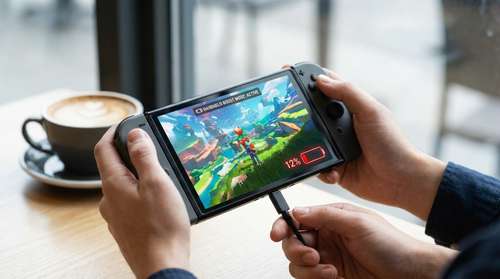
The much-anticipated Nintendo system update March 2026 has finally arrived, bringing a wave of feature enhancements to the gaming community. Chief among these additions is a highly requested graphical feature that radically improves Nintendo Switch 2 backward compatibility. However, the introduction of this visual upgrade has triggered unexpected backlash, as widespread reports indicate that the Switch 2 Handheld Boost Mode severely compromises Nintendo Switch 2 battery life. While legacy games look better than ever on the new hardware, early testers are finding their play sessions cut remarkably short.
The Magic and Cost of Switch 2 Handheld Boost Mode
Included in firmware Version 22.0.0, the new handheld mode essentially tricks the system into running older Switch software as if it were securely docked in TV mode. Bypassing the native 720p constraints of the original hardware, it pushes compatible backward-compatible titles to a crisp 1080p resolution on the un-docked display. The visual leap is undeniable, effectively giving aging classics a modernized facelift without requiring a separate developer patch.
Yet, this visual fidelity comes with a massive hardware tax. Nintendo's official patch notes quietly warned that utilizing the setting would increase power consumption, but players were largely unprepared for the harsh reality. During highly intensive gaming sessions, users report that the feature can slash the Nintendo Switch 2 battery life to under 90 minutes. While testing slightly older titles like Doom (2019) yielded a relatively modest reduction—dropping playtime from five hours down to roughly three hours and forty minutes—pushing the hardware to its absolute limit with vast open-world games creates an extreme power draw.
Navigating Switch 2 Performance vs Battery Life
The core of the controversy lies in the delicate balance of Switch 2 performance vs battery life. Modern portable hardware inherently struggles to push high resolutions without generating excess heat and requiring massive energy reserves. When players activate the boost function by navigating to the "Nintendo Switch Software Handling" settings menu, the system's internal processors work overtime to maintain stable frame rates while outputting a docked-level image.
For commuters and frequent travelers, this extreme battery drain is an absolute dealbreaker. Playing demanding titles at maximum screen brightness with the boost enabled practically tethers the console to a wall outlet or a high-capacity power bank. In contrast, those playing primarily around the house may barely notice the drawback, simply treating their mobile console like a slightly more portable home theater screen. As industry rumors continue to swirl regarding upcoming Switch 2 4K upscaling features for native next-generation titles, the community remains divided over whether graphical superiority is worth such a severe portability sacrifice.
Disabling Touch Controls and Peripheral Quirks
Beyond the ongoing battery discourse, forcing TV mode logic onto a mobile format introduces several bizarre technical quirks. Nintendo has explicitly stated that some touchscreen features may be entirely disabled when the software boost is active. Furthermore, physically attached joypads may suddenly register as wireless Switch 2 Pro Controllers, leading to unexpected behavior in specific titles that require specialized input functionalities.
Expanding the Nintendo Switch 2 GameCube App
Despite the power consumption uproar, the latest firmware patch delivered celebrated wins in other software departments. The Nintendo Switch 2 GameCube App received a stealthy but substantial bump to Version 1.6.0. Fans revisiting legacy titles through the Nintendo Classics service noticed immediate, desperately needed improvements to analog stick sensitivity. Previously, emulator dead zones made iconic releases like F-Zero GX and The Legend of Zelda: Wind Waker notoriously difficult to control accurately.
Dataminers and eagle-eyed players also discovered that the retro application now utilizes High Dynamic Range (HDR) for its CRT shader. This clever implementation counteracts the screen-darkening effect typically caused by artificial scanlines, resulting in a vibrant, arcade-accurate glow that perfectly mimics classic televisions. Paired with the simultaneous digital release of Pokémon XD: Gale of Darkness, the emulation environment is steadily becoming the definitive way to experience sixth-generation classics.
The Road Ahead for Nintendo's Ecosystem
Nintendo's aggressive software evolution in early 2026 highlights a clear commitment to maximizing the potential of their latest hardware iteration. With Super Mario Bros. Wonder receiving its own dedicated Version 1.1.0 update to prepare for the upcoming Switch 2 Edition launching next week, the gaming ecosystem is rapidly maturing.
Players must ultimately decide how they want to experience their favorite libraries. The trade-off between stunning on-the-go visuals and dependable Nintendo Switch 2 battery life is stark and unforgiving. If you plan to engage the Switch 2 Handheld Boost Mode for your next long-haul flight, you will definitely want to pack an extra charger.