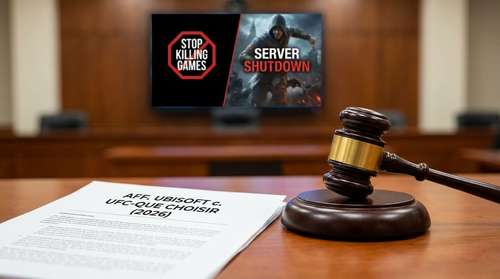
On the exact second anniversary of a highly controversial server closure, the debate over who truly owns the media we buy has escalated to the courts. In a landmark Ubisoft lawsuit 2026, the prominent French consumer rights organization UFC-Que Choisir has officially filed legal action against the video game publishing giant. The dispute centers entirely on The Crew server shutdown, which rendered the 2014 racing title permanently unplayable for millions of paying customers. By bringing this fight to the Tribunal Judiciaire de Créteil, advocates are demanding a definitive legal answer to a growing modern problem: can a corporation unilaterally erase a product you paid for?
The Core of the UFC-Que Choisir Ubisoft Case
At the heart of the UFC-Que Choisir Ubisoft case is a fundamental clash over consumer transparency and digital ownership rights. When players purchased the open-world racing game, they received physical discs or digital downloads under the assumption that they were acquiring a durable good. UFC-Que Choisir alleges that Ubisoft engaged in deceptive commercial practices by failing to clearly communicate an expiration date for the product at the time of purchase.
According to the lawsuit filed on March 31, 2026, the consumer group argues that burying revocable license clauses deep within terms of service agreements strips buyers of their basic rights. The organization is demanding the removal of what it deems abusive contractual clauses and is seeking financial compensation for affected consumers who lost access to their purchased media. The French consumer group aims to secure a pioneering decision that clarifies the exact obligations video game publishers owe their audiences. If successful, the lawsuit could compel developers to completely redesign their end-user license agreements, ensuring that digital storefronts can no longer mask the temporary nature of their products behind vague legal jargon.
The Publisher's Defense Strategy
Ubisoft maintains that consumers purchased a temporary license to access online services—a license the publisher can revoke at its discretion. Industry executives have historically defended these actions by pointing to the heavy infrastructure costs required to keep aging online ecosystems operational and the reality that online services have a limited lifespan. However, UFC-Que Choisir contends that this one-sided contract is abusive. They are pushing for a legal mandate that would force companies to guarantee a minimum right of use independent of publisher-hosted servers, fundamentally challenging the industry's standard operating procedures.
The Fallout from The Crew Server Shutdown
The origins of this legal battle trace back to December 2023, when Ubisoft quietly delisted the racing game from all digital storefronts. Just three months later, on March 31, 2024, the company officially pulled the plug on the servers. Because the title required a persistent internet connection even for single-player exploration, the closure transformed the software into useless dead code.
What makes the shutdown particularly egregious to consumer advocates is the game's original monetization model. Unlike free-to-play titles that clearly operate as live services, this was a premium, full-priced retail product that also heavily pushed in-game microtransactions. Gamers invested not only their initial purchase price but also additional funds for virtual vehicles and cosmetic upgrades, all of which evaporated the moment the servers were deactivated.
Players were met with revoked digital licenses and denied refunds, sparking immediate backlash across the global gaming community. While the current French legal action represents the most organized and significant challenge to date, it is not the first time the publisher has faced legal scrutiny over this specific title. In late 2024, two gamers in California filed a similar lawsuit against the company. This mounting legal pressure signals a rising global frustration with the industry's shift toward treating full-priced games as temporary subscription services rather than permanent goods.
Momentum for the Stop Killing Games Movement
The abrupt erasure of the racing game acted as the primary catalyst for the Stop Killing Games movement. Launched by YouTuber Ross Scott shortly after the servers went dark, the campaign has spent the last two years mobilizing consumers, lawmakers, and preservationists to fight back against software destruction. By bridging the gap between frustrated gamers and legal entities, the initiative has successfully pushed a niche internet complaint into the mainstream legal spotlight.
This grassroots initiative directly supports the French lawsuit, viewing it as a critical stepping stone toward establishing robust video game preservation laws. Advocates argue that publishers have a moral and legal responsibility to issue end-of-life patches—such as offline modes or self-hosted server tools—when officially ending support for a game. The movement highlights a growing consensus that the historical and cultural preservation of interactive media is currently being sacrificed for corporate convenience and bottom-line economics.
A Watershed Moment for European Citizens Initiative Gaming
Beyond the French tribunals, the push for reform has reached the highest levels of European governance. The controversy successfully birthed a massive campaign under the European Citizens Initiative gaming framework. Dubbed "Stop Destroying Videogames," the petition gathered over 1.3 million verified signatures from across the continent. This massive public mandate easily surpassed the legal threshold required to force a formal response from the European Commission, which is actively investigating the matter and is expected to deliver its findings by the end of July.
Furthermore, the European Parliament is scheduled to hold a dedicated hearing on the issue on April 16, 2026, according to movement representatives. Lawmakers will debate whether current consumer protection frameworks are equipped to handle the realities of modern digital commerce. Industry giants are undoubtedly watching these developments closely. If European regulators side with the consumers, it could trigger a seismic shift in how games are developed, marketed, and maintained worldwide, potentially forcing publishers to build offline contingencies into all future releases.
For now, the gaming industry holds its breath as the legal proceedings commence in France. The outcome of this lawsuit will likely set a powerful legal precedent, either cementing the era of revocable digital licenses or finally securing permanent ownership rights for gamers globally.