In a major blow to the handheld gaming market, Valve has officially discontinued the entry-level 256GB Steam Deck LCD and warned of looming stock shortages for its premium OLED models. The announcement, which appeared on the Steam store front yesterday, confirms that the ongoing global memory crisis—fueled by the insatiable appetite of AI data centers—has finally hit the gaming hardware giant. With the Steam Deck LCD discontinued and the highly anticipated Steam Machine facing potential delays, 2026 is shaping up to be a challenging year for PC gamers.
Steam Deck LCD Production Halted Permanently
Valve’s decision to sunset the 256GB LCD model marks the end of an era for the device that kickstarted the handheld PC revolution. According to the updated product page, the LCD model is "no longer in production" and will be removed from the store entirely once current inventory is depleted. This move effectively raises the entry price for the Steam Deck ecosystem, pushing budget-conscious gamers toward the refurbished market or third-party alternatives.
The 256GB LCD model had long served as the affordable gateway into SteamOS. Its removal suggests that Valve is consolidating its production lines to focus on the higher-margin OLED models, a necessary pivot as component costs skyrocket. If you have been waiting to pick up the cheapest Steam Deck, the window of opportunity is closing rapidly.
AI Boom Causes Critical RAM Shortage
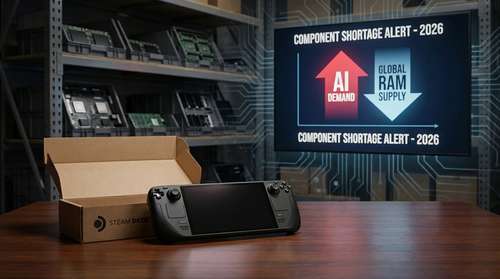
The culprit behind this sudden disruption is the explosive growth of artificial intelligence. The AI memory crisis gaming hardware manufacturers are facing is no longer a theoretical risk—it is a reality. Major tech giants like NVIDIA, Google, and Microsoft are buying up massive quantities of DDR5 and HBM (High Bandwidth Memory) to power their next-generation AI data centers. This "memory gold rush" has created a supply vacuum for consumer electronics.
"Steam Deck OLED may be out-of-stock intermittently in some regions due to memory and storage shortages," Valve explained in a candid statement. The shortage is not just about availability; it is about cost. With DRAM prices surging over 300% since late 2025, manufacturers are forced to bid against trillion-dollar AI companies for the same silicon, squeezing supply for devices like the Steam Deck.
Steam Deck OLED Stock Updates 2026
While the OLED models remain in production, prospective buyers should brace for volatility. Steam Deck OLED stock updates 2026 indicate that availability will be "intermittent" throughout the year. The 512GB and 1TB OLED versions use high-speed LPDDR5 RAM, a component that is increasingly being diverted to edge AI devices and servers.
Analysts predict that these shortages could persist well into 2027. If you see a Steam Deck OLED in stock today, purchasing it immediately might be the safest bet. The days of readily available inventory appear to be paused, at least until the global supply chain adjusts to the AI sector's massive demand.
Steam Machine Launch in Jeopardy?
The Valve RAM shortage impact extends beyond handhelds. The long-awaited return of the Steam Machine, Valve’s console-like living room PC, appears to be in limbo. Originally targeted for an "early 2026" release, Valve has now admitted they must "revisit" the shipping schedule and pricing.
Reports suggest that the Steam Machine delay 2026 is a direct result of component scarcity. Securing enough RAM to mass-produce a new console at a competitive price point is currently near-impossible. While Valve still aims to ship the Steam Machine—along with the new Steam Controller and Steam Frame—in the first half of the year, industry insiders warn that supplies will be severely constrained at launch.
What Are the Best Steam Deck Alternatives?
With Valve’s hardware facing supply constraints, gamers might look elsewhere. However, the memory crisis is industry-wide. Competitors like the ASUS ROG Ally and Lenovo Legion Go are likely to face similar pressure on handheld gaming PC availability.
For now, the best Steam Deck alternatives might be found in the pre-owned market or by securing remaining stock of Windows-based handhelds before they too adjust prices to reflect the soaring cost of RAM. As the AI boom continues to reshape the tech landscape, the era of cheap, abundant gaming hardware may be on a temporary hiatus.