
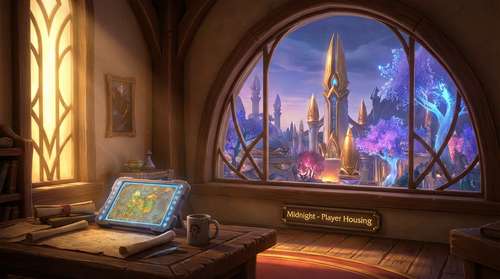
After nearly two decades of waiting, the verdict is finally in: World of Warcraft: Midnight isn't just another expansion—it is the homecoming players have dreamed of. Launched globally yesterday, March 2, 2026, the 11th expansion in Blizzard’s titan-sized MMO has successfully delivered on its most ambitious promise yet. While the Worldsoul Saga review scores are still settling, early impressions suggest that the introduction of player housing has fundamentally altered the game's DNA, offering a depth of immersion that rivals the best in the genre. As we step into the revamped forests of Quel’Thalas, it’s clear that Blizzard hasn't just updated a map; they’ve rebuilt the heart of Azeroth.
Player Housing: The Ultimate Game-Changer?
Let’s address the elekk in the room immediately: WoW Midnight player housing is spectacular. For years, skeptics worried that Blizzard’s engine was too archaic to support a robust housing system, but the developers have proven them wrong. Unlike the garrison system of Warlords of Draenor, which felt isolating, the new housing neighborhoods are vibrant, social hubs. The system is fully integrated with the Warband feature introduced in the previous expansion, meaning your unlocks are account-wide. Whether you’re a Horde main or an Alliance alt, your home is a shared sanctuary.
The customization options are staggering. From the ability to dye furniture—a feature long requested by the community—to the free-form placement of trophies earned from the new Prey system, the level of control is impressive. Our WoW housing guide is already in the works, but suffice it to say, the absence of rental fees or decay mechanics makes this system respectful of player time. It’s a creative outlet that feeds directly into the core gameplay loop; running the new Voidspire raid isn't just about gear anymore, it’s about snagging that rare void-touched chandelier.
Return to Quel’Thalas: A Haunting Beauty
Beyond the hearth, the Midnight expansion gameplay shines in its world design. The return to the elven kingdom is a masterclass in nostalgia weaponized for storytelling. Quel’Thalas has been reimagined not as a static zone, but as a living, breathing warfront. The juxtaposition of the eternal golden autumn of Eversong Woods against the encroaching, inky tendrils of the Void is visually arresting. The rebuilt Silvermoon City is massive, finally flight-accessible, and feels like a true capital worthy of the Blood Elves.
The narrative stakes are incredibly high. Xal’atath’s assault on the Sunwell feels urgent, and the introduction of the Haranir allied race adds a fascinating layer of ancient lore to the mix. Playing through the campaign as the new Devourer Demon Hunter specialization—a ranged, Void-focused DPS spec—feels incredibly fresh. Blasting enemies with entropic energy from a distance offers a rhythm distinct from the frenetic melee of Havoc, proving that Blizzard still has new tricks for old classes.
Endgame and Verdict
As we dive deeper into the three launch raids—The Voidspire, The Dreamrift, and March on Quel'Danas—the polish of this Blizzard 2026 expansion becomes evident. The Prey system offers a compelling open-world activity that bridges the gap between casual exploration and hardcore hunting, rewarding players with both cosmetics and power. While it is too early to declare it the definitive #1, Midnight is making a strong case for being one of the best WoW expansions 2026 has to offer.
For now, the consensus is clear: Midnight is a triumph. It respects the past while boldly forging a new future where players don't just visit Azeroth—they live there.