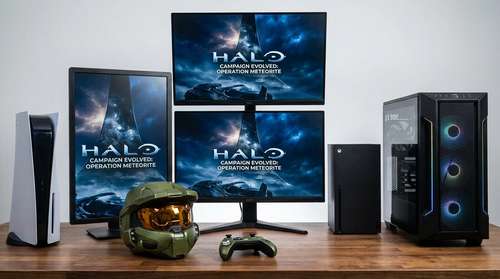
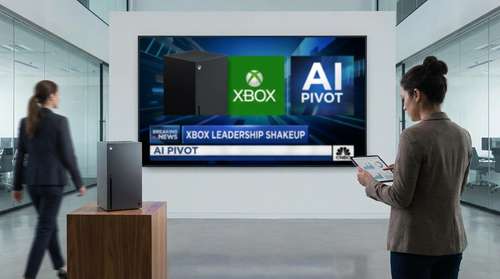
The gaming world is reeling following a seismic Xbox leadership shakeup 2026 that has seen the sudden departure of top executives and a controversial pivot toward artificial intelligence. In a move that has triggered widespread alarm about the brand's survival, Xbox President Sarah Bond has resigned, and Phil Spencer has announced his retirement. But it is the chilling assessment from original Xbox co-founder Seamus Blackley that has truly ignited the firestorm. Blackley has publicly warned that the appointment of an AI-focused successor signals that the beloved console business is effectively being "sunsetted," describing the new era as mere "palliative care" for a dying giant.
The End of an Era: Sarah Bond and Phil Spencer Exit
In a stunning announcement that dropped earlier this week, Microsoft confirmed the immediate departures of its two most visible gaming leaders. Phil Spencer, the face of the brand for over a decade, is retiring after nearly 40 years with the company. Even more shocking to industry insiders was the news of the Sarah Bond Xbox exit. Bond, who was widely viewed as Spencer's heir apparent and a champion for player-centric hardware, has resigned to "begin a new chapter."
Replacing them is not a veteran game developer or a studio head, but Asha Sharma, the former President of Microsoft's CoreAI product. Sharma’s background lies entirely in generative AI and platform scaling, with little to no prior experience in the traditional gaming industry. This drastic changing of the guard has sent a clear message: Microsoft's gaming division is no longer just about games; it is now a vehicle for the company's aggressive AI ambitions.
From "Power Your Dreams" to "Transform Model AI"
The appointment of an AI executive to lead Microsoft Gaming suggests a fundamental shift in strategy. Internal memos cited by The Tech Buzz and other outlets indicate that Sharma’s mandate is to integrate "transform model AI" into every facet of the business. While Microsoft has officially stated this will "enhance player experiences," critics fear it marks a departure from the handcrafted, creative blockbuster titles that defined the console wars.
Seamus Blackley's Warning: The "Palliative Care" Comment
No voice has been louder or more ominous than that of Seamus Blackley, the co-creator of the original Xbox. In a candid interview with GamesBeat just days after the shakeup, Blackley offered a brutal diagnosis of the situation. He explicitly stated that businesses within Microsoft that are not central to the CoreAI mission are being deprioritized.
"Xbox, like a lot of businesses that aren't the core AI business, is being sunsetted," Blackley warned. "They don't say that, but that's what's happening. I expect that the new CEO, Asha Sharma, her job is going to be as a palliative care doctor who slides Xbox gently into the night."
This "palliative care" analogy suggests that the current Microsoft gaming division news is not about growth, but about managing a decline while extracting remaining value. Blackley argues that CEO Satya Nadella’s "incredible number of bets" on AI means that gaming is now seen as an abstract data problem rather than an artistic medium. "AI abstracts every problem from the minds of the executives who believe in it," he added, fearing that the "auteur model" of game design is incompatible with the new leadership's vision.
The Future of Xbox Hardware: Sunsetting or Evolving?
The most immediate concern for fans is the future of Xbox hardware. For months, rumors had swirled about a next-generation handheld and a high-powered console set for 2026. However, with Bond—the primary advocate for this hardware roadmap—now gone, the fate of these devices hangs in the balance. Xbox sunsetting rumors have moved from fringe conspiracy theories to serious industry conversations.
Analysts are now questioning whether the traditional console cycle is dead at Microsoft. Instead of a dedicated box under your TV, the Xbox Game Pass AI pivot could see the service morph into a purely cloud-based, AI-generated content platform accessible on any screen. If Blackley's prediction holds true, the Series X may be the last traditional flagship console Microsoft ever produces, with future "hardware" being little more than AI-powered streaming sticks or reference devices for third-party manufacturers.
A Crisis of Identity for the Green Brand
The Seamus Blackley Microsoft AI comments have crystallized a fear that has been growing for years: that Xbox is losing its soul to corporate synergy. The brand that once fought tooth and nail to bring Halo and Gears of War to living rooms is now being led by an executive whose expertise is in "aligning business models to long-term value" rather than shipping Game of the Year contenders.
For the millions of gamers who have invested in the ecosystem, the message is confusing and disheartening. While Matt Booty has been promoted to Chief Content Officer to ostensibly safeguard the creative side, the power dynamic has undeniably shifted. The question remains: Can Xbox survive as a distinct identity under the crushing weight of Microsoft's AI mandate, or is the "palliative care" phase already underway?