The Consumer Electronics Show (CES) 2026 has officially wrapped up in Las Vegas, leaving gamers and tech enthusiasts analyzing a week of massive hardware reveals. From the showroom floor to the private briefings, this year's expo was defined by a shift toward smarter, more adaptable display technologies and the maturing of AI integration in gaming. While the highly anticipated CES 2026 gaming highlights included a slew of RTX 50-series powered machines, the real conversation starters were NVIDIA's motion-clarity breakthrough and Lenovo's audacious new form factors. If you thought 4K 240Hz was the endgame, the industry just moved the goalposts.
NVIDIA G-Sync Pulsar: A New Standard for Motion Clarity
For years, gamers have had to choose between the tear-free smoothness of Variable Refresh Rate (VRR) and the crystal-clear motion of backlight strobing. At CES 2026, NVIDIA officially launched NVIDIA G-Sync Pulsar, a technology that finally bridges this gap. By algorithmically synchronizing the monitor's overdrive and backlight strobing pulses with the render rate of the GPU, G-Sync Pulsar delivers what NVIDIA claims is "4x effective motion clarity" without the flickering or brightness loss associated with older strobing tech.
This isn't just a paper launch; major display partners like ASUS and Acer showcased flagship monitors running Pulsar out of the box. In demonstrations, fast-paced shooters like Valorant and Counter-Strike 2 retained perfect edge clarity even during rapid camera pans. For competitive gamers, this technology represents the most significant leap in visual fidelity since the introduction of high-refresh-rate panels, effectively making a 360Hz Pulsar display look clearer than a standard 1000Hz panel.
Lenovo's Shape-Shifting Prototypes and Legion Go Updates
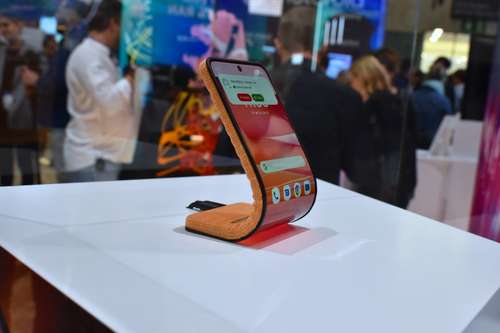
One of the most buzzed-about devices wasn't a traditional laptop or console, but a proof-of-concept that challenges our definition of portable gaming. While rumors of a dedicated Lenovo rollable handheld have circulated in enthusiast circles, Lenovo stole the spotlight with the Legion Pro Rollable Concept laptop. This 16-inch device features a motorized OLED screen that expands horizontally to a massive 23.8-inch ultrawide aspect ratio at the touch of a button. It serves as a bridge between portable gaming and a full desktop battle station, offering a 21:9 or even 32:9 field of view without requiring an external monitor.
On the handheld front, Lenovo doubled down on the success of its portable line. The new Legion Go 2 (Gen 2) was unveiled with a native SteamOS option, addressing one of the biggest community requests. While it retains a fixed 8.8-inch screen, the integration of the rollable technology seen in their laptop concept hints that a true Lenovo rollable handheld could be the next logical step in their R&D pipeline. For now, the Legion Pro Rollable laptop stands as the "best of show" for form-factor innovation, proving that screens are no longer static rectangles.
RTX 50 Series Laptops: Power Meets Efficiency
The RTX 50 series laptop news dominated the briefing rooms, with NVIDIA's Blackwell architecture finally making its mobile debut in force. The flagship RTX 5090 Laptop GPU is the centerpiece of this year's high-performance machines, boasting improved power efficiency that allows thinner chassis designs to house desktop-class performance. Manufacturers are pairing these chips with Intel's new Core Ultra "Panther Lake" processors, which feature dedicated NPU units for handling background AI tasks, freeing up the GPU for pure frame generation.
What’s distinct about the best gaming laptops 2026 is the widespread adoption of OLED panels across all price tiers. Mid-range models equipped with RTX 5060 and 5070 GPUs are now regularly sporting 240Hz OLED displays, a feature previously reserved for machines costing upwards of $3,000. This democratization of high-end display tech means that even budget-conscious gamers will see a massive upgrade in visual quality this year.
ASUS and Razer Push Boundaries
ASUS continues to refine its premium lineup, with the ASUS ROG Zephyrus 2026 models receiving subtle but impactful redesigns. The new Zephyrus G14 and G16 now feature improved cooling chambers that allow the RTX 50-series chips to run at higher wattages without thermal throttling. However, the showstopper was the revamped ROG Zephyrus Duo 16, which now sports dual 4K OLED touchscreens, eliminating the gap between the main and secondary displays for a seamless multitasking experience.
Meanwhile, Razer focused on integrating AI into the physical gaming environment. Beyond the perennial updates to the Blade 16 and 18—which now support Thunderbolt 5 for massive bandwidth—Razer showcased Project AVA, a holographic AI companion. While the CES 2026 best of show awards were fiercely contested, Razer's commitment to improving the "quality of life" for gamers through haptics and AI-driven ambient tech offered a refreshing break from the raw spec wars.
The Verdict: A Year of Refinement and wild Concepts
CES 2026 proved that the gaming hardware industry is far from stagnant. We are moving beyond simple resolution bumps into an era where hardware adapts to the user—whether through G-Sync Pulsar clearing up motion blur or screens that physically unroll to offer more immersion. As these technologies trickle down from concepts and flagships to consumer products later this year, PC gaming is poised to look—and feel—better than ever.