As the curtain falls on CES 2026 in Las Vegas, the gaming industry is reeling from a week of monumental announcements that have fundamentally redefined performance expectations. While the event showcased everything from holographic AI companions to production-ready humanoids, two giants stole the show: NVIDIA’s official launch of the Rubin GPU architecture and Intel’s Panther Lake chips. With the latter boasting a staggering 77% performance leap in integrated graphics, and NVIDIA teasing the roadmap for the RTX 60 series, this year's expo has set a blistering pace for the future of AI-powered play.
NVIDIA Rubin Architecture: Beyond the RTX 5090
While the show floor was dominated by custom variants of the newly released GeForce RTX 5090—including MSI’s award-winning Lightning Z—NVIDIA CEO Jensen Huang had his eyes fixed firmly on the horizon. The headline event was the official unveiling of the Rubin GPU architecture, the successor to Blackwell that promises to power the next generation of AI and gaming experiences.
Built on a refined 3nm process and introducing groundbreaking HBM4 memory integration, the Rubin architecture is primarily targeted at data centers with the new R100 AI accelerators. However, the implications for gamers are massive. During the keynote, NVIDIA confirmed that the consumer derivatives of Rubin—likely to be the GeForce RTX 60 series—are slated for a late 2027 release. These future cards will leverage Rubin’s upgraded Tensor Cores to deliver what Huang called “neural rendering 2.0,” a massive leap in path tracing efficiency.
For now, the RTX 50 series remains the king of 2026, but the Rubin announcement provided critical RTX 60 series release news that enthusiasts were craving. The architecture features a new hierarchy of cache and NVLink 6 interconnects that, when scaled down to consumer silicon, could finally make 8K/60fps path tracing a reality without heavy reliance on upscaling.
Intel Panther Lake: A 77% Leap in Mobile Gaming
If NVIDIA owned the desktop conversation, Intel conquered the mobile sector. The official launch of the Intel Core Ultra Series 3, codenamed Panther Lake, has delivered on its ambitious promises. Manufactured on the revolutionary Intel 18A process, these chips are not just an iterative update—they represent a generational shift.
The flagship Core Ultra 9 388H and Ultra 7 358H processors feature the new Xe3 graphics architecture (Arc B390), which Intel claims delivers a 77% faster gaming performance compared to the previous Lunar Lake generation. In live demos, the Arc B390 iGPU ran Cyberpunk 2077 at 1080p High settings at a locked 60fps without a discrete GPU. This level of performance is achieved thanks to the new NPU capable of 50 TOPS, which handles background AI tasks and powers the new XeSS 3 upscaling technology, freeing up the GPU for raw rendering.
The Rise of AI Handhelds
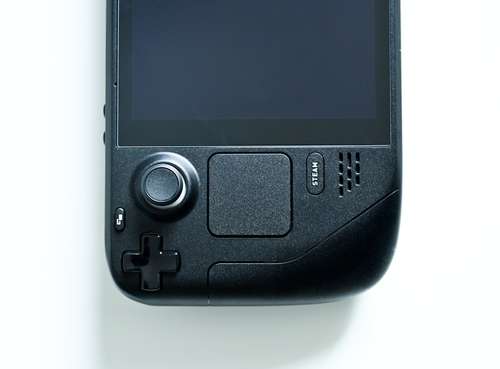
This leap in integrated graphics has triggered a gold rush for next-gen handheld gaming 2026. Several manufacturers unveiled devices powered by Panther Lake on the show floor:
- MSI Claw 8 AI+: A refreshed model utilizing the Core Ultra 7 358H, promising AAA gaming battery life of over 4 hours.
- OneXPlayer Super X: A high-end tablet/handheld hybrid featuring the "Frost Bay" external liquid cooling module to sustain peak boost clocks.
- ASUS ROG Ally 2 (Teaser): While not fully detailed, ASUS hinted at a Panther Lake refresh coming mid-year to compete with the new wave of best of CES 2026 gaming handhelds.
AI NPCs and Production-Ready Humanoids
Beyond raw silicon, CES 2026 highlighted how AI is changing the content of games. NVIDIA expanded its ACE (Avatar Cloud Engine) with "Rubin-class" inference, allowing for NPCs that possess long-term memory and distinct personalities. Razer demonstrated this with a concept holographic companion that learns your playstyle and offers real-time coaching.
On the robotics front, Boston Dynamics’ Atlas took home the "Best Robot" award, showcased as a "production-ready humanoid." While primarily industrial, a demo showed the robot interacting with a VR gaming setup, hinting at a future where physical robots could serve as immersive haptic feedback devices or active gaming opponents.
Benchmarks and The Year Ahead
Early AI gaming performance benchmarks for Panther Lake suggest it outperforms the entry-level discrete GPUs of 2024, effectively killing the low-end dGPU market for laptops. With the Intel Core Ultra 3 series launching in devices as early as February, 2026 is shaping up to be the year where "gaming on the go" finally requires no compromises. Meanwhile, desktop enthusiasts have the RTX 5090 to enjoy today, with the tantalizing promise of Rubin waiting in the wings.