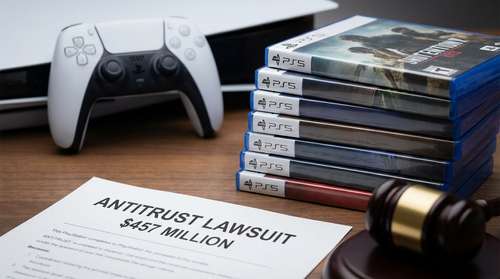

The global gaming community has drawn a firm line in the sand following the controversial announcement of the Sony physical disc ban 2028. When Sony Interactive Entertainment confirmed earlier this month that all physical game disc production for new PlayStation consoles will be completely discontinued by January 2028, the consumer backlash was immediate, fierce, and unprecedented. Gamers, physical media collectors, and retail workers are now aggressively fighting back against a forced PlayStation 5 digital only future. They are armed with a viral Don't Kill the Disc petition that recently surged past 335,000 signatures, as well as the looming shadow of a massive PlayStation 457 million lawsuit challenging the company's digital pricing practices. This escalating rebellion highlights a massive shift in how players are organizing to protect actual game ownership.
The "Don't Kill the Disc" Petition Reaches a Boiling Point
Almost immediately after Sony dropped its bombshell news on July 1, the pushback materialized. Independent Canadian video game retailer PNP Games, spearheaded by Jade Pearce, launched the Don't Kill the Disc petition on Change.org. In just three weeks, it has exploded into one of the fastest-growing gaming petitions in recent memory, officially crossing 335,000 verified signatures from furious fans around the globe.
The core message of the movement is nuanced but crystal clear: gamers are not inherently against digital downloads; they are vehemently opposed to digital being the only available option. Eliminating the disc drive wipes out the entire pre-owned market, threatens thousands of retail jobs across the globe, and fundamentally weakens PS5 game ownership rights. Petition organizers have repeatedly emphasized that an all-digital landscape transforms game ownership into a temporary licensing agreement. In this environment, players do not actually own the games they purchase; they merely rent access to them at the platform holder's discretion, an access that can be revoked if servers are shut down or licenses expire.
Stichting Massaschade Consument Sony: The $457 Million Legal Threat
The widespread anxiety surrounding the 2028 disc phase-out is heavily compounded by an ongoing legal war over digital pricing models. The Stichting Massaschade Consument Sony class-action lawsuit in the Netherlands, initially launched on behalf of thousands of Dutch PlayStation users, alleges that the hardware manufacturer is actively abusing its market dominance. Operating under the Dutch WAMCA collective action regime, the foundation is seeking upwards of €400 million ($457 million) in consumer compensation.
They argue that a strict PlayStation Store monopoly has resulted in players overpaying for digital games and in-app purchases by as much as 47% compared to the cost of physical counterparts. This PlayStation 457 million lawsuit perfectly illustrates the community's worst fears regarding a digital-only ecosystem. If physical games are eradicated completely by 2028, players will have absolutely no alternative but to buy directly from Sony's proprietary storefront. Without brick-and-mortar retailers to offer competitive pricing, holiday discounts, or a thriving second-hand trade-in market, Sony will maintain absolute, unchecked control over the cost of every single new release. For many industry analysts and players, this lawsuit serves as a massive red flag highlighting the true, hidden cost of digital convenience.
What the 2028 Disc Ban Means for Game Ownership Rights
Sony's primary justification for the Sony physical disc ban 2028 relies heavily on shifting consumer trends. The company notes that digital media purchasing significantly outpaces physical disc sales, framing the move as a natural evolution to align with how modern communities prefer to access their entertainment. While older titles printed before the cutoff date won't be impacted, the reality of a PlayStation 5 digital only future—and seemingly a disc-less PlayStation 6—is a terrifying prospect for game preservationists.
The Threat to Game Preservation
When digital storefront servers inevitably shut down, purely digital games can be lost to time forever. We have already seen this happen with countless delisted digital-only titles across previous console generations. Protecting PS5 game ownership rights means ensuring that a purchased game remains fully accessible regardless of server connectivity, corporate bankruptcies, or expired music licenses. Physical discs have historically served as the ultimate safeguard against silent digital censorship and permanent delistings.
Can Consumer Pressure Break the PlayStation Store Monopoly?
The combined, mounting pressure of a 335,000-strong player revolt and severe European legal scrutiny over a PlayStation Store monopoly puts Sony in a highly complex position. While the tech giant has reportedly already begun winding down physical disc manufacturing supply chains and retraining staff in preparation for its rigid 2028 deadline, the ongoing public relations disaster is becoming increasingly difficult to wave away.
The impressive traction of the Change.org petition proves that physical media is far from dead—there remains a massive, passionate, and vocal demand for real, tangible games. Whether this monumental consumer pushback and the looming threat of the PlayStation 457 million lawsuit can force a multi-billion dollar corporation to reverse course remains to be seen. However, one thing is absolutely certain: the gaming community is not going down without a fierce fight to protect their discs and their wallets.