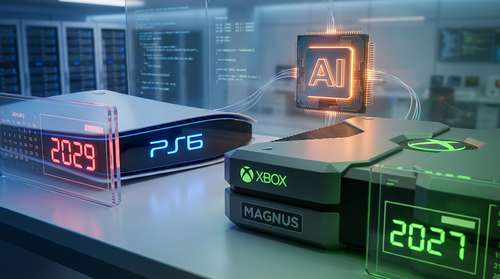
The console wars may have just taken a decisive and unexpected turn. In a development that has sent shockwaves through the gaming industry, a bombshell report from Bloomberg indicates that Sony is considering pushing the PlayStation 6 release date back to 2028 or even 2029. This potential delay, driven by a crippling shortage of AI-grade memory components, comes just as rival Microsoft has reportedly finalized the silicon for its next-gen Xbox, codenamed "Magnus," which remains firmly on track for a 2027 launch.
The Bloomberg Report: PS6 Delay Rumors Gain Traction
According to sources familiar with Sony Group Corp.'s internal deliberations, the gaming giant is facing a difficult reality. The original timeline for the PlayStation 6, previously expected to land in late 2027 to replace the PlayStation 5, is now in jeopardy. The Bloomberg report published yesterday suggests that the company is "considering" a delay that could see the next-generation hardware slip to 2029.
This strategic pivot isn't a choice Sony wants to make. The company has historically adhered to a strict six-to-seven-year lifecycle for its consoles, a "carefully orchestrated strategy" designed to maintain user engagement and developer momentum. Disruption to this cycle could leave the PlayStation ecosystem stagnant just as Nintendo prepares its Switch successor and Microsoft gears up for a new generation. If these PS6 delay rumors prove accurate, Sony risks ceding critical ground to its competitors for nearly two years.
AI Hardware Crisis: The 'RAMmageddon' of 2026
The culprit behind this potential delay is not a lack of innovation, but a brutal economic reality: the AI chip shortage of 2026. The explosion of generative AI has created an insatiable demand for high-bandwidth memory, specifically the GDDR7 and HBM components essential for next-gen gaming consoles.
Why AI is Eating the Console Market
Tech giants like OpenAI, Google, and Meta are currently buying up vast quantities of memory to power their massive data centers. This "rampant AI demand," as described by industry analysts, has caused component prices to skyrocket. For a consumer device like the PS6, which needs to retail at an accessible price point (likely between $500 and $600), the current cost of bill-of-materials is becoming prohibitive.
Sony finds itself in a bidding war against trillion-dollar AI companies for the same silicon supply. If Sony were to launch the PlayStation 6 in 2027 as planned, they might be forced into a PlayStation 6 price increase that would alienate consumers—potentially pushing the console to $800 or more—or face unsustainable losses on every unit sold.
Next-Gen Xbox 'Magnus' Leaks: Microsoft Ready for 2027
While Sony scrambles to secure inventory, Microsoft appears to be in a much stronger position. Fresh next-gen Xbox Magnus leaks surfacing this week from prominent hardware insiders suggest that the Redmond giant has already finalized the silicon for its next console.
Reports indicate that the "Magnus" chip, powered by AMD's Zen 6 CPU architecture and RDNA 5 graphics, has reached the "lock" stage. This means the design is complete, and Microsoft can proceed to manufacturing and testing. By locking in their contracts and designs early, Microsoft may have insulated itself from the worst of the volatility affecting the component market.
If the Xbox "Magnus" launches in 2027 as planned, and the PS6 is indeed delayed until 2029, Microsoft would enjoy a two-year head start. This scenario echoes the Xbox 360 era, where a year-long lead allowed Microsoft to establish a massive install base before the PlayStation 3 arrived. A two-year gap in the modern era, however, could be far more damaging to Sony, especially if the Sony vs Microsoft next-gen narrative shifts entirely to Xbox's favor during that window.
The Future of Console Gaming
The potential divergence in launch windows raises serious questions about the future of console gaming. If the PS6 is delayed, developers may be forced to support the aging PS5 hardware for nearly a decade, potentially holding back true next-gen game design. Conversely, Xbox players could be enjoying ray-tracing capabilities and AI-driven upscaling features that PlayStation owners won't see for years.
Furthermore, the memory crisis is also affecting other players. Reports suggest Nintendo is also grappling with component costs for its Switch successor, though its lower-spec hardware offers some insulation. However, for the high-performance market, the message is clear: the AI revolution is exacting a heavy toll on the gaming industry.
As we move further into 2026, all eyes will be on Sony. Will they bite the bullet and launch an expensive console in 2027, or will they retreat to 2029 and risk losing the generation before it even begins? For now, the momentum seems to have shifted dangerously away from the market leader.