Realme has officially shattered the barrier between mobile and desktop gaming with the announcement of the Realme Neo 8. Unveiled today in China, the device introduces a groundbreaking 'PC Handheld Mode' that allows users to play verified AAA Steam titles natively on the phone—no streaming required. Powered by the next-generation Snapdragon 8 Gen 5 chipset and a massive 8,000mAh battery, the Neo 8 is positioned not just as a flagship smartphone, but as a legitimate competitor to dedicated handhelds like the Steam Deck.
The Dawn of Native Mobile PC Gaming
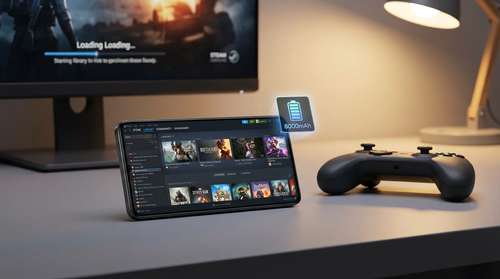
The headline feature of the Realme Neo 8 is undoubtedly its new PC Handheld Mode. Unlike previous solutions that relied on cloud streaming or complex emulation workarounds like Winlator, this mode offers a seamless, system-level integration with the Steam platform. Users can log directly into their Steam accounts, download supported titles to the device's storage, and play them offline with shared progress syncing automatically when reconnected.
"We are bringing the desktop experience to your pocket," a Realme spokesperson stated during the launch event. The company confirmed that over 50 popular PC titles have already been verified for the device. The launch lineup includes heavy hitters like Sekiro: Shadows Die Twice, Tomb Raider, and the long-awaited Hollow Knight: Silksong. This level of compatibility suggests Realme has worked closely with software partners to optimize the translation layers for the ARM-based Snapdragon architecture.
Under the Hood: Snapdragon 8 Gen 5 & 8,000mAh Battery
To support desktop-class gaming, the Realme Neo 8 packs some of the most impressive hardware seen in 2026. At its core lies the Qualcomm Snapdragon 8 Gen 5, featuring the custom Oryon CPU architecture. Early benchmarks suggest the chip delivers a 35% performance leap over its predecessor, capable of handling complex physics and high-fidelity textures that would choke older mobile processors.
Perhaps even more critical for gamers is the battery life. Realme has managed to fit a colossal 8,000mAh silicon-carbon battery into an 8.3mm chassis. This breakthrough addresses the primary pain point of high-performance mobile gaming: stamina. Industry analysts estimate the Neo 8 could offer 4-5 hours of continuous AAA gameplay, significantly outlasting current handheld PC competitors.
Display and Cooling
The visual experience is driven by a 6.78-inch Samsung AMOLED panel with a 1.5K resolution and a blistering 165Hz refresh rate. To keep thermals in check during extended gaming sessions, the phone employs an advanced 9-layer cooling system with a vapor chamber area larger than any previous Realme device.
How 'PC Handheld Mode' Works
The user experience appears designed for simplicity. Activating the mode transforms the Realme UI into a console-like interface similar to Steam's Big Picture Mode. From here, users can browse their library, install games, and map touch controls. However, Realme is strongly pushing the use of external controllers. The device launches alongside a dedicated telescopic controller accessory that snaps onto the phone, effectively turning it into a Nintendo Switch-style handheld.
The integration also solves the "save file anxiety" many mobile gamers face. By leveraging Steam Cloud Sync, a player can start a campaign on their desktop PC and seamlessly pick up where they left off on the bus using their Realme Neo 8. This continuity is a major selling point for the handheld PC gaming phone market.
Pricing and Availability
The Realme Neo 8 is set to hit the Chinese market on January 22, with global availability expected later in Q1 2026. While official international pricing hasn't been confirmed, the Chinese pricing suggests a disruptive entry into the market, undercutting premium gaming phones from competitors like ASUS and RedMagic. With specs including up to 24GB of LPDDR5x RAM and 1TB of UFS 4.1 storage, the Neo 8 is shaping up to be the device to beat this year.
As mobile hardware continues to close the gap with consoles, the Realme Neo 8 stands as a pivotal moment—proof that the dream of playing Cyberpunk or Elden Ring natively on a phone is no longer science fiction, but a tangible reality.