Las Vegas has once again transformed into the epicenter of the technology world, and for gamers, CES 2026 will be remembered as the year hardware finally caught up with our wildest imaginations. The official Best of CES 2026 awards have been finalized, curated by a coalition of major tech outlets including ours, and the winners represent a seismic shift in how we play. From displays that defy physics to silicon that redefines power, this year’s show floor was dominated by CES 2026 gaming award winners that didn't just iterate—they evolved.
While artificial intelligence was the buzzword of 2024 and 2025, this year saw it seamlessly integrated into hardware that feels tangible and essential. But it wasn't just about software; raw mechanical innovation made a roaring comeback. If you missed the livestreams, don't worry. We’ve curated the definitive list of the best gaming hardware 2026 has to offer. Here are the top 5 innovations that stole the show.
1. Lenovo Legion Pro Rollable: The Shape-Shifting Titan
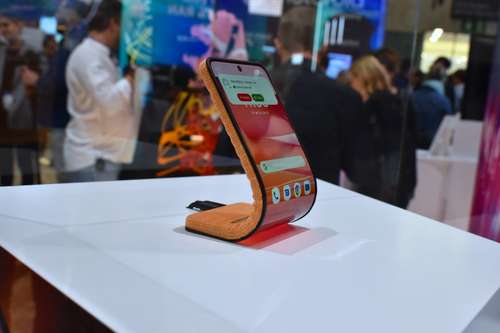
For years, foldable screens have been promising to revolutionize laptops, but Lenovo just changed the conversation entirely with the Lenovo Legion Pro Rollable. Taking the top spot on our list, this machine solves the eternal conflict between portability and immersion. At first glance, it looks like a standard 13-inch ultra-portable, perfect for slipping into a messenger bag. But with the press of a dedicated tactile key, the motorized display unspools vertically, transforming into a massive 21-inch ultrawide canvas.
The engineering wizardry here is stunning. Unlike previous concepts that felt fragile, the Legion Pro Rollable’s mechanism feels robust, designed for the rigors of daily use. The extended 8:9 aspect ratio effectively gives you two 16:9 screens stacked, perfect for streamers who need chat open above their game, or developers coding on the go. Under the hood, it’s powered by the latest mobile silicon, but the real story is that screen. It’s bright, responsive, and finally delivers a desktop-class viewing experience in a form factor that travels anywhere. This is easily one of the most exciting CES 2026 highlights.
2. MSI RTX 5090 Lightning Z: The 600W Powerhouse
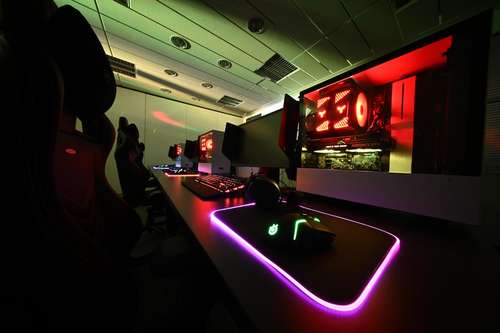
NVIDIA’s Blackwell architecture has finally arrived in consumer hands, and MSI has taken the flagship chip and pushed it to its absolute limit. The MSI RTX 5090 Lightning Z is a monster in every sense of the word. While the reference specs of the RTX 5090 are already formidable—boasting 21,760 CUDA cores and 32GB of GDDR7 memory—MSI’s Lightning Z variant overclocks this beast to stratospheric levels.
This card is massive, occupying four slots and demanding a 600W TGP (Total Graphics Power), but it justifies its footprint with performance that makes 8K gaming a reality. The Lightning Z features a redesigned Tri-Frozr 5 cooling system with liquid-crystal polymer fans that keep the card surprisingly quiet under load. But the killer feature is the integration of DLSS 4.5 support, which now uses AI to generate not just frames, but entire texture details that weren't in the original render. For enthusiasts looking to future-proof their rig for the next half-decade, this is the undisputed king of the top gaming tech trends.
3. Samsung Odyssey 3D G9: Immersion Without the Headset
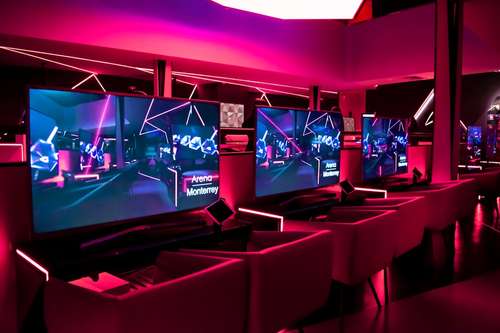
Virtual reality is great, but wearing a headset for hours is still a friction point for many. Samsung’s solution? The Samsung Odyssey 3D G9, a glasses-free 3D gaming monitor that actually works. We’ve seen attempts at this technology before, but the 2026 iteration utilizes a proprietary 6K panel combined with ultra-fast eye-tracking cameras that adjust the parallax barrier in real-time. The result is a convincing, depth-filled image that pops out of the screen without the headache-inducing ghosting of yesteryear.
During our demo on the show floor, playing a flight simulator felt genuinely vertigo-inducing as the cockpit separated from the horizon. The 32-inch curvature wraps around your peripheral vision, and the new "Dual Mode" allows the monitor to switch from high-fidelity 6K at 165Hz to a blistering 330Hz competitive mode instantly. It’s a bold step forward for display technology and a deserving winner of a Best of CES 2026 nod.
4. Razer Project Ava: The Holographic AI Companion
Razer is known for its "Project" concepts that sometimes never see the light of day, but Razer Project Ava feels different—it feels inevitable. Moving beyond simple voice assistants, Ava is a desktop holographic interface that projects a fully animated 3D avatar onto your desk. Powered by a local Large Language Model (LLM) optimized for gaming, Ava can see what's happening on your screen and offer real-time coaching, manage your system thermals, or just keep you company during long grind sessions.
What makes Ava distinct is the "empathy engine." If you’re on a losing streak in a ranked match, the avatar reacts with encouragement or frustration alongside you. It connects to your Razer Chroma lighting to turn your entire room into a mood ring reflecting the game's state. It’s the ultimate convergence of the AI trend and gamer culture, making it one of the most talked-about innovations at the show.
5. Lenovo Legion Go 2: The Handheld Market Matures
Rounding out our top 5 is the evolution of handheld gaming. The original Legion Go was a solid entry, but the Lenovo Legion Go 2 refines the formula in a way that feels like a generation leap. The biggest shocker? It ships with a customized version of SteamOS out of the box, signaling a massive shift in the Windows vs. Linux handheld war. This partnership with Valve ensures that the user experience is console-like from the moment you boot it up.
Hardware-wise, it features the new AMD Z2 Extreme chip, which offers a 40% performance boost over its predecessor while consuming less power. The detachable controllers have been slimmed down but retain the FPS mode mouse functionality, and the screen is now a stunning OLED panel with VRR (Variable Refresh Rate) support. By combining premium hardware with the industry's best handheld OS, Lenovo has set a new standard for portable play in 2026.