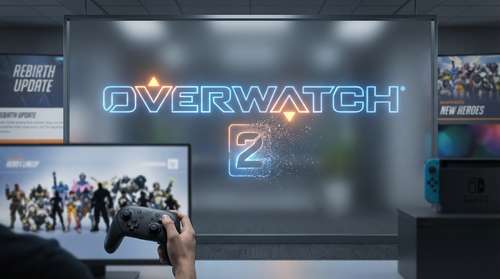
In a historic pivot that aims to redefine the future of its flagship hero shooter, Blizzard Entertainment has officially dropped the numerical '2' from Overwatch 2, reverting the title simply to Overwatch. Announced today during the 'Overwatch Spotlight 2026' presentation, this massive rebranding effort—dubbed the Blizzard Overwatch Rebirth update by the community—signals a fresh start for the franchise. The update, launching February 10, 2026, will introduce a staggering 10 new heroes throughout the year, a dedicated Overwatch Switch 2 port, and a complete overhaul of the game's competitive structure.
The 'Rebirth' of Overwatch: Dropping the 2 and Reclaiming Identity
After four years of a rocky transition to a live-service model, Blizzard is hitting the reset button. The decision to drop the sequel number is more than just a marketing cosmetic; it represents a philosophical shift back to the game's core identity as a "forever game." Game Director Aaron Keller described the move as a way to unify the player base and end the era of fragmentation.
"We don't want players waiting for an Overwatch 3," Keller stated during the broadcast. "Overwatch is a living, evolving world. By returning to the original title, we are committing to a singular, cohesive experience that honors our history while aggressively pushing gameplay forward."
This rebranding coincides with the launch of a new year-long narrative arc titled "The Reign of Talon." Unlike previous fragmented lore drops, this storyline will unfold in real-time across six seasons, integrating directly into map updates, in-game events, and hero releases. The 'Rebirth' initiative is clearly designed as a Blizzard player trust initiative, directly addressing long-standing complaints about content droughts and cancelled PvE promises by delivering an expansion's worth of content for free.
Overwatch New Heroes 2026: Jetpack Cat, Domina, and More
The most shocking announcement of the day was the reveal of 10 new heroes slated for release in 2026—the aggressive "hero drop" in the game's history. Blizzard is breaking its usual cadence by releasing five new heroes simultaneously with the launch of Season 1 on February 10.
The launch lineup includes a mix of long-requested favorites and fresh faces, split between the Overwatch and Talon factions:
- Jetpack Cat (Support): The decade-long meme is finally reality. Jetpack Cat joins as a high-mobility aerial support who can tether to allies and grant verticality.
- Domina (Tank): A Talon-aligned "poke tank" from the Vishkar Corporation who uses shield-recharging beams to control space.
- Emre (Damage): A fallen Overwatch agent now brainwashed by Talon, capable of transforming his weapon for devastating burst damage.
- Mizuki (Support): A Hashimoto clan member wielding bladed fans and a "Healing Kasa" chain ability.
- Anran (Damage): A pyro-kinetic hero who uses fire fans to scorch enemies and control chokepoints.
Five additional heroes will be released one per season throughout the rest of the year, ensuring the meta remains dynamic. This unprecedented influx of characters is a direct response to the stagnant metas that plagued competitive PC gaming news cycles in 2024 and 2025.
Overwatch Switch 2 Port and Competitive Overhaul
Console players finally received the news they've been waiting for: an optimized Overwatch Switch 2 port is in development and scheduled for release in Spring 2026, likely coinciding with Season 2. While specific technical details were scarce, Blizzard confirmed the new hardware will support higher framerates and visual fidelity parity with current-gen consoles, addressing the performance bottlenecks of the original Switch version.
New Sub-Roles and Gameplay Depth
Beyond new heroes and platforms, the gameplay itself is receiving a massive layer of depth. The update introduces "Sub-Roles" for every class, adding specific passives to differentiate playstyles. Tanks will now be categorized as Initiators (mobility-focused), Bruisers (sustain-focused), or Stalwarts (shield-focused), each with unique passive buffs.
This system aims to solve the "counter-swap" fatigue by giving players more agency within their role, allowing for more strategic flexibility without forcing a complete hero switch. It's a bold move that could redefine Overwatch rebranding 2026 as the year the game finally balanced its casual appeal with hardcore competitive depth.
Regaining Fan Trust in 2026
The Blizzard Overwatch Rebirth update is arguably the publisher's most critical moment since the 2016 launch. By effectively giving away a massive expansion for free and listening to the community's oldest request (yes, even Jetpack Cat), Blizzard is extending an olive branch to a jaded player base.
With a reset to "Season 1," a unified name, and a content roadmap that frankly puts previous years to shame, Overwatch isn't just dropping a number—it's attempting to reclaim its throne. Whether this "Rebirth" will lead to a lasting renaissance remains to be seen, but for the first time in years, the future of Overwatch looks undeniably bright.