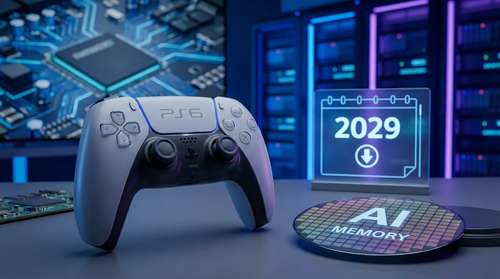
The gaming industry was rocked this week by reports that Sony is actively reconsidering its hardware roadmap, potentially pushing the PlayStation 6 release date to as late as 2029. According to internal sources cited by Bloomberg, the delay is not a result of development hurdles, but rather a casualty of the exploding demand for artificial intelligence infrastructure. As tech giants scramble to secure high-bandwidth memory for AI data centers, traditional consumer electronics manufacturers are finding themselves at the back of the queue, facing a supply chain reality that could fundamentally alter the next decade of gaming.
AI Boom Cripples Global Console Supply Chains
The core of the issue lies in a critical AI chip shortage gaming hardware manufacturers never anticipated. The rapid expansion of generative AI models like ChatGPT and Gemini has triggered an insatiable global appetite for advanced DRAM and GDDR memory chips—components that are also essential for powering next-generation consoles. Reports indicate that semiconductor fabricators are shifting their production lines to prioritize high-margin enterprise AI clients over consumer gaming partners.
This pivot has created a bottleneck described by some industry insiders as "RAMmageddon." With limited fabrication capacity available, the cost of memory modules has skyrocketed, making the bill of materials for a theoretical 2027 console launch economically unviable. For Sony, releasing a reasonably priced console under these conditions would mean either absorbing massive losses or launching hardware at a price point that would alienate the average consumer.
Sony Hardware Roadmap: A 9-Year Generation?
If the PS6 delay 2029 reports hold true, the PlayStation 5 would have a nine-year lifecycle—the longest in Sony's history. Launched in late 2020, the PS5 was originally expected to be succeeded around 2027, following the traditional six-to-seven-year cadence established by previous generations. However, this Sony hardware roadmap adjustment suggests a strategic pivot toward squeezing every ounce of value from the current generation.
Sony CFO Lin Tao recently hinted at this shift, noting that the PS5 is merely in the "middle of the journey." This PS5 lifecycle extension will likely place a heavier burden on the recently released PS5 Pro to bridge the performance gap. We can expect Sony to double down on software optimization and potentially release further mid-generation peripheral refreshes to keep the ecosystem feeling modern while the semiconductor crisis 2026 stabilizes.
The Impact on Developers
For game developers, a longer generation isn't necessarily bad news. It allows studios to fully master the PS5 architecture without the pressure of learning new hardware specs immediately. Major upcoming titles like Grand Theft Auto VI will have a longer runway to sell copies on an established install base of over 100 million units, maximizing profitability before the expensive transition to next-gen development begins.
Nintendo Switch 2 and Next-Gen Console Prices
Sony is not the only giant feeling the squeeze. The ripple effects of the memory shortage are reportedly forcing competitors to re-evaluate their strategies as well. Sources suggest that Nintendo is facing similar pressure, with rumors swirling that the successor to the Switch could see a significant price hike. The next-gen console prices are no longer immune to the inflation affecting the enterprise tech sector.
While Nintendo had reportedly aimed for a $399 launch price for its next system, the surging cost of flash memory and RAM components might force that figure closer to $450 or even $499. This industry-wide inflation signals a permanent end to the era of subsidized hardware. If component costs remain elevated due to AI dominance, the days of the $500 high-end console may be over, with future machines potentially debuting at $600 or more to cover the premium on silicon.
Looking Ahead: The 2029 Landscape
A 2029 release window for the PlayStation 6 would drastically change the competitive landscape. It opens a window of opportunity for Microsoft, should they manage to secure supply for a 2027 or 2028 Xbox release, potentially repeating the Xbox 360's head-start advantage. However, if the semiconductor crisis 2026 is as pervasive as analysts fear, Microsoft may be in the same boat, forcing a universal synchronization of delays across the industry.
For now, gamers should get comfortable with their current hardware. The "next generation" is seemingly further away than ever, pushed back by a technological revolution that values chatbots and data processing over polygon counts and frame rates. As the lines between gaming tech and AI infrastructure blur, the patience of the console market is about to be tested like never before.